Category Archives: Thoughts


As you lie there

What goes on in your mind

As you lie there, awake but unable to get up?
What dreams do you have
When pain killers stop the pain
But play tricks with your brain
And make you smile, or frown
Or scared like a little girl
Crying out for her mom,
While asleep?
Do you hear people talking
About you,
How you have changed?
How it breaks their heart to see you so?
Do you hear us when we talk to you?
To tell you that we’re sorry,
That we love you,
And that we’ll be fine,
No need to worry?
Share this:

Travel Woes

Afternoon clouds over Visayas, Philippines. I was so excited to see this cloud formation. Looks like a duck, don’t you think?
Pack.
Unpack.
Pack.
Unpack.
I could fill this page
With the same words
According to the number of times
I had to
Pack.
Unpack.
Barely had the time to start shedding
The pounds from stress eating
And I’m stressing and stress eating again.
Someone once said to me,
When tragedies pile up
Then you have a comedy.
How come I’m not laughing?
March 3, 2016
Share this:

The excitement over meeting at night

No moonlight photos because I found I have never taken good enough photos of the moon. I seldom go out at night these years. Sigh
Click here to hear a reading of the poem.
(So why am I talking about love again? Because I’m tired of hearing people tell me I look tired or miserable. In short I’m tired of feeling tired. Logical? No? I don’t care.)
This poem has a sister poem called “Parting at Morning.” But I don’t want to talk about parting. Meetings are exciting. Partings can be beautifully sad or sadly beautiful, both of which are my usual preference, but I’m not in the mood to be sad. So, exciting things for now.
Now let’s imagine this man traveling on a boat, obviously all by himself, on a dark night and crossing quite a distance (“three fields”) to meet with his lover — a woman (this is Victorian poetry, and we know Browning wrote this for his wife, Elizabeth Barrett, so.) He braves the darkness and the distance to be with her. One can feel the excitement in the imagery in the third and fourth lines of the second stanza. In the darkness — a small light, and a soft familiar voice.
I’ve read some analyses of this poem, but not thoroughly because I do not like to be influenced heavily by what others say about this poem. I prefer to have my own understanding of any poem. We did read this in our poetry class some twenty years ago (ouch!), all I remember is the sound of my professor’s voice reading it. It was always relaxing.
I digress.
This poem is often interpreted as having a male speaker because the poet is male. But read the poem again and imagine the speaker being a woman. Does that work for you? It certainly does for me.
Reading this poem in the 21st century, one may ask, why can’t the speaker be a woman? Surely, women can “gain the cove with pushing prow”? Women can cross “three fields” to get to the secret meeting place? I bet a lot of women have braved weather and distances to meet with a lover.
But whether the speaker is male or female is not my main point. My main point is actually quite simple: when you’re in love and you have to meet with the object of your affection, meeting in secret, especially at night, can have its excitement that for the moment you wish would never end.
But of course it ends. Duh.
Share this:

On Trying to be Good

Sunset over Mindanao Sea (Bohol Sea), Philippines
My heart has been “battered” for weeks now, so I’m not praying for more; but these days this sonnet has been like an earworm (brainworm) in my head.
Holy Sonnet XIV by John Donne
Batter my heart, three-person’d God ; for you
As yet but knock ; breathe, shine, and seek to mend ;
That I may rise, and stand, o’erthrow me, and bend
Your force, to break, blow, burn, and make me new.
I, like an usurp’d town, to another due,
Labour to admit you, but O, to no end.
Reason, your viceroy in me, me should defend,
But is captived, and proves weak or untrue.
Yet dearly I love you, and would be loved fain,
But am betroth’d unto your enemy ;
Divorce me, untie, or break that knot again,
Take me to you, imprison me, for I,
Except you enthrall me, never shall be free,
Nor ever chaste, except you ravish me.
People raised to believe in heaven and hell, or just raised to be a good person and to be sorry for doing bad things, most likely feel guilty for being bad and continually endeavor (and, perhaps, still fail) to be good.
The sonnet expresses that desire to be good (to be with God) again, and the supplicant is willing to be cleansed in any way (by God) just to become pure again.
Perhaps because it’s the Lenten Season, or maybe it’s just because somebody reminded me of this sonnet, that it’s stuck in my head, but it’s been awhile that I have not prayed like this.
Arrogance? I don’t think so. Too busy living? Maybe. Had enough? Well….
Share this:

Sunsets and new dawns
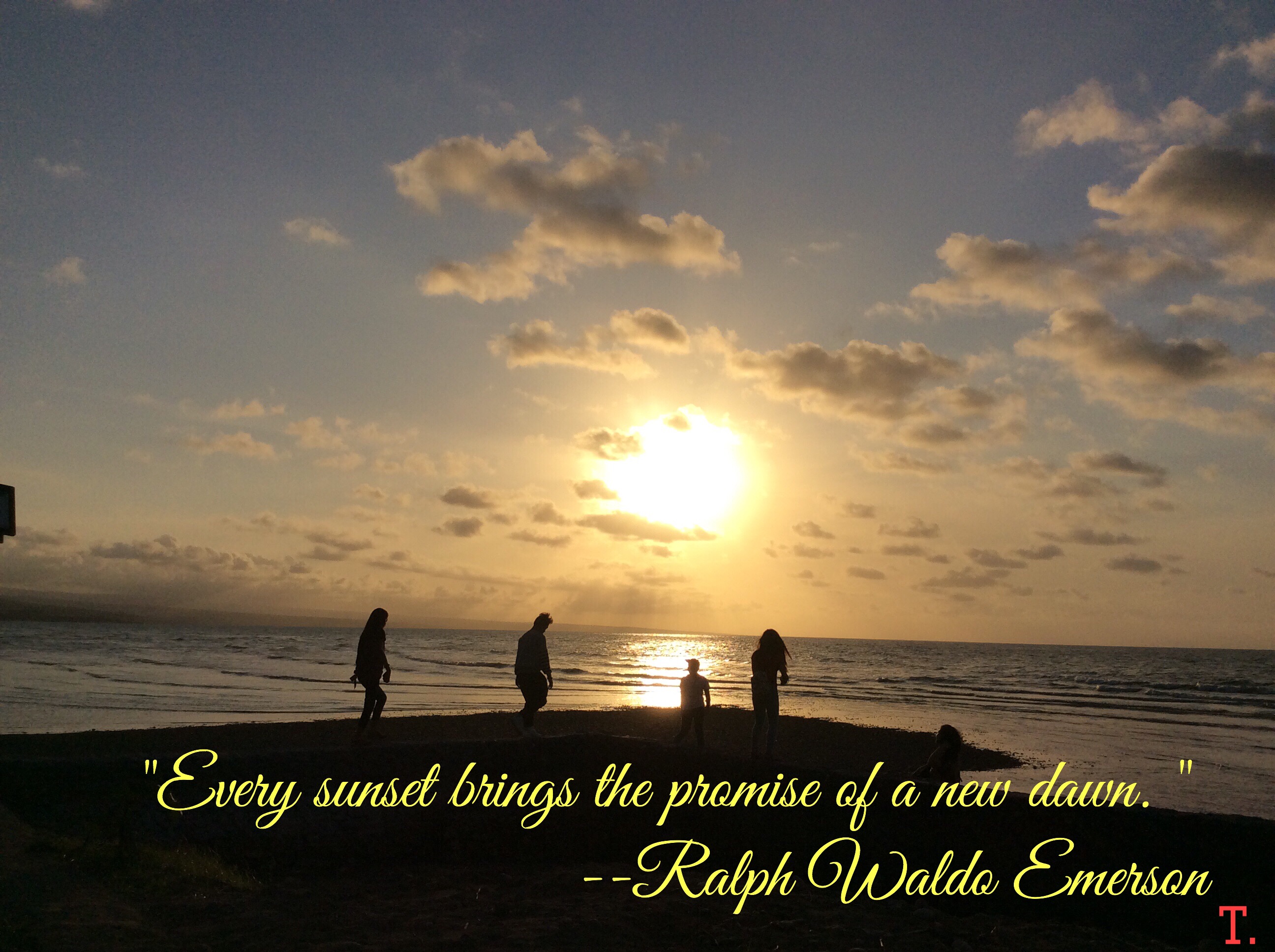
I am a morning person, but I like sunsets especially when I’m watching it sitting on the beach. But I have not always liked sunsets.
A long, long time ago, when I was just 23, I decided to enter the convent. My colleagues back then couldn’t understand why, and one senior faculty (a good friend) jokingly cursed me that I would cry every night on my first week in the convent, missing my mother (yes, I was still that attached to my mother at 23!) And he was so right! As soon as the sun was only half visible in the horizon, I would start to cry. I laugh every time I remember that episode in my life, but back then it was a terrible feeling.
I like the beauty of the sunset, the cool breeze on one’s skin, and the smell of the sea. It gives one the feeling that in this serene moment, nothing could go wrong. But then darkness sets.
After darkness though, you know there will be light again. And that’s always something to look forward to.
So are you a sunrise or a sunset person? 🙂
Share this:

A time to weep and a time to laugh

I read something this morning as I was sitting on a bench facing the lake on campus. It said, “Being grateful protects you from negative thinking.” I read those words after shedding tears. Over life.
I was, and still am, grateful for the time and place for quiet that I had this morning. For two months I had neither, and I felt like I was drowning.
Some people like to be around a lot of other people when they are going through a difficult time. I just need peace and quiet. And I finally had both this morning.
I know that there is a time for everything. That the weeping will pass too. And that I will laugh again. I’m already grateful for that time.
I can’t wait.
Share this:

On Living to be 100

A few weeks ago, a friend and I exchanged thoughts about living to be 100, and this was my reply: “Nah. I really don’t want to live that long. Not even if I’m healthy. I’m curious about what’s on the other side. If there’s nothing, then at least I won’t be disappointed. ”
And my friend replied: “Consciousness is probably overrated. “
For Christians and other believers of an afterlife, death is not scary as it means reunion with the Creator. It means eternal life of happiness. (I came across this post about death a few weeks ago, and the writer beautifully expresses, not exactly the same but similar, thoughts that I have about life and death.)
I have no idea how many there are like me , but I am one of those who are more curious about what’s on the other side, rather than prolonging our earthly life. I am not saying though that I would willingly abandon my responsibilities as a mother, daughter, wife, sister, aunt. My point is, I simply prefer not to live too long.
However, I have thought about the possibility of living a longer life. I once met an 86-year old medical doctor, who was quite spry — travellling back and forth from the US to Asia, attending medical conferences, seeing patients, doing Zumba. She’s enjoying her life at 86. Would I want to be able to do that at 86?
With discoveries and inventions in the fields of science and technology, people are living longer and healthier lives. Not only that, it probably won’t be long before immortality ceases to be mere imagination and becomes reality with the ability of human beings to create cyborgs.
If I could stay fit till I’m 100, perhaps I would be able to do all the things I would like to do but in which at the moment I am unable to indulge. I have talked about this with a friend. We both could not understand how people could be at a loss as to what to do when there’s so many interesting things to do when you have the time and health to do them
I’m not sporty nor sociable, so I do not need to be with so many people all the time. If I could live to be 100, I would spend my time reading all the books I’ve been meaning to read. I would take photographs of beautiful flowers and landscapes, learn more about the human brain, study astronomy, volunteer to help children with special needs and starving children, go.out for morning walks, watch the sunset, and write down my thoughts about all these things.
So does this mean I want to live to be 100?
No. Not at this time when humanity’s mortality is still very real, when one can still witness the human body aging, when you can still hear people groaning in pain and watch them suffer emotionally , as they struggle to remember dates and names of people they used to love so passionately, and suffer physically as they can no longer move what used to be nimble limbs that made them jump, run, throw or catch or hit a ball.
Having a body that slowly stops functioning one part at a time is torture. Seeing it happen to others is a scary enough reminder that it can happen to you too.
So, no. I do not want to live to be 100. “Consciousness is overrated.”
How about you?
Share this:

Mother’s Memories

You stared blankly into space
As if looking at something
That only you could see.Then you opened your mouth to speak
About old friends and the fun times you had with them
And how there was only peace among everyoneYou said you wanted to go back to the old house
With the people you say were your real friends.We wish we could give you what you want.
But the house has been gone for over half a century
And your friends’ tombstones have even fadedI wiped a tear away as I felt I was no longer in your memory.
But I braved myself to ask, “Do you know who I am?”
You turned to look at me and softly said my name,And added, “My dearest child.”
Share this:

On living, loving and leaving

Sonnet 73 by William Shakespeare
That time of year thou may’st in me behold
When yellow leaves, or none, or few, do hang
Upon those boughs which shake against the cold,
Bare ruin’d choirs, where late the sweet birds sang.
In me thou see’st the twilight of such day,
As after sunset fadeth in the west,
Which by-and-by black night doth take away,
Death’s second self, that seals up all in rest.
In me thou see’st the glowing of such fire
That on the ashes of his youth doth lie,
As the death-bed whereon it must expire
Consum’d with that which it was nourish’d by.
This thou perceivest, which makes thy love more strong,
To love that well which thou must leave ere long.
There has been much debate on the meaning of this sonnet, particularly the last couplet:
This thou perceivest, which makes thy love more strong,
To love that well which thou must leave ere long.
What is the young man supposed to eventually leave before long: his friend or his own youth?
I will not join in the debate, but I am quoting the sonnet here because I was reminded of it (and John Donne’s Sonnet 10) twice today: first, when I read this poem by John White called Laughing about it ; second, when I read Temple Grandin’s tribute to Oliver Sacks, who also wrote a moving article reflecting on his relationship with his Orthodox family and the Sabbath.
Whether the speaker meant that the young man had to leave his friend or his youth, to me, is not the point, rather that the knowledge that one is leaving something valuable makes one appreciate it or love it even more.
My first real understanding of this line happened one summer day when my best friend and I stood in a forest, listening to the sound of the leaves of the trees as the breeze was passing through, and I said it was beautiful I wish it could last forever; and he said it was beautiful simply because it was not going to last.
(Not long after that my best friend left, and for a while, that memory always made me cry. But with time, I have learned to call on that memory, and it just brings a beautiful feeling.)
If we truly love someone or something –a place, a person, a pet or life itself — the knowledge of our imminent leaving of it/them will make our love for it/them even stronger.
Perhaps it is the best way to live every minute of our short life here: to always remember that we won’t be here forever, that we are always about to leave. Perhaps then we can love wholeheartedly, not only for a minute or an hour or for a day, but for a lifetime.
Share this:

On Choosing Whom to Love

“All my life, as soon as a person got attached to me, I did everything to distance them. The first person whom I loved and I was faithful to escaped me through drugs, through betrayal. Maybe many things came from this, from vanity, from fear of suffering further, and yet I have accepted so much suffering. But I have in turn escaped from everyone since and, in a certain way I wanted everyone to escape from me.”
“I sometimes accuse myself of being incapable of love. Maybe this is true, but I have also been able to select a few people and to take care of them faithfully, with the best of myself, no matter what they do.”
– Albert Camus as quoted in Camus, A Romance by Elizabeth Hawes (I bought a hardbound copy of this book years ago, but I saw the book again yesterday as my husband and I were sorting books to throw and to keep!)
Camus was a known womanizer, he talked about loving the many women in his life in the love letters he wrote them, yet in his journals he wrote of distancing himself from them. He sometimes wondered if he was incapable of love, yet admitted to “taking care” of a few people faithfully the best he could no matter what these people did.
I am not writing to justify nor excuse Camus’ womanizing, but rereading this quote from him reminded me of how simple it can be to love somebody, truly love somebody, anybody; but people, especially men like Camus make it so complicated. To me, he WAS capable of love, and indeed he loved those whom he faithfully took care of no matter what they did.
You cannot choose who to like or dislike or be physically/sexually attracted to, it’s a feeling. But you can definitely choose whom you give your time, energy and yourself (body and soul) to – and that’s love.
You cannot choose your biological family (not yet, anyway, perhaps with technology it will be possible), but you can choose to love or not love your family. You may like your family, but you may not love them. (“Yeah, they’re alright. They’re cool. I haven’t heard from my folks for a month!) You may not like your family sometimes, but you may love them because you take care of them, you provide for them, and make sure they are all right.
Now I can totally understand when young people make the mistake of “falling in love” with someone who everyone thinks is the wrong person, because as recent findings reveal, the brain, particularly the pre-frontal cortex responsible for regulation of emotions, does not reach full maturity until mid-20s. Young people may not be able to “think ahead” and “make mature decisions”, and it’s perfectly understandable because neurologically speaking, they are not of that age yet.
But if you are a “typical” (I no longer like using the word “normal” because, really, what does it mean these days?) adult, you should be able to think and choose whether or not to invest in a person or a relationship. If a part of you is doubtful whether you should give more of your time, energy (and money) to be with a person who doesn’t seem to give the same to be with you, you don’t need to pray to the gods or ask your friends over and over again whether this person loves you or not. Get that pre-frontal cortex working and figure it out yourself. It will be good exercise for your brain. 🙂
Share this:

Musings on the brain on New Year’s Eve

I took this picture early this morning on my way to work. Beautiful sunrise on New Year’s eve. The cool air, blue sky, white clouds, birds flying — all these made me feel hopeful for the coming year. Happy New Year!:)
It’s New Year’s Eve, and I am thinking about new year’s resolutions which I have had the habit of making every year for the last 20 years or so. But this year, influenced by my new-found fascination with the human mind/brain, I am thinking whether I should make them.
This is going to be about my new-found interest in the brain then, because “out of the abundance of the heart, the mouth speaks” or the fingers type.
Several factors led me to my current interest, the most important of which is my son’s condition. Elijah has ASD (autism spectrum disorder). He was diagnosed when he was 2, now he is almost 5. Like some other autistic children I know of, he would laugh hysterically for no reason (this has since lessened to a considerable degree after we put him on the GFCF diet), or cry for no apparent reason, and wake up in the middle of the night screaming and kicking (this totally, well, hopefully it’s totally, came to an end after we put him on the GFCF diet).
Wanting to understand what Eli is going through, what goes on in his head when he’s laughing or crying (he can express in sentences what he wants but nothing else), I decided to read more about the brain, and my interest led me to my discovery of the great mind of Dr. Oliver Sacks. The great thing about having coffee with knowledgeable friends is you can talk about subjects that both of you really enjoy discussing, and you get not only a good feeling about being understood but also the satisfaction that you learned something valuable. I mention this because if not for my friend’s enthusiastic introduction of The Man Who Mistook His Wife for a Hat, I would have kept postponing reading Oliver Sacks’ book, and I would have stayed the same person I was three months ago.
This book is one of the four books I consider to have the major influence in shaping the ME I am today (excluding the Bible, that is). The other three are Dostoevsky’s The Brothers Karamazov, Kafka’s Metamorphosis, Carnegie’s How to Win Friends and Influence People (Huh? But yes.) The Man Who Mistook His Wife for a Hat is a collection of case histories of patients that Dr. Sacks saw in his capacity as a neurologist. I don’t think I will list him as one of my favorite writers, but he will always be one of my favorite people in the world. I say that because literature has always been my preferred reading material, and my favorite authors have always been literary writers, but I find Dr. Sacks’ writings (I just started reading A Leg to Stand On) though they are case histories, were written with understanding and compassion. The patients were written about not as subjects of an examination, but as real human beings with feelings — joy, sadness, fear, anger. Dr. Sacks made me see that there is more to a human being than what they say or what they do. For some, though they look normal to others, they may not have control over their language or actions.
There are 20 stories in this book but I will only mention four that really made an impact on me.
The first is the patient who is the source of the title of this book. He literally mistook his wife for a hat and grabbed her hair and pulled, thinking his wife’s head was his hat. He only realized it wasn’t when his wife made a sound. He could not recognize people by their faces, but by the sound of their voice. He mistook people for objects, and objects for people,addressing door knobs and heads of hydrants like they were people. I know it sounds like something you would see in a slapstick comedy, and perhaps in reality, we would still find this funny, but then when you realize that a person with this kind of neurological disorder has to deal with this every single day of his life, and could very well be the subject of mockery or ridicule, then it ceases to be funny. The patient was fortunate that he was a respected musician, whose gift for music was unaffected by this disorder.
What others may see as quirkiness is actually a result of an injury or damage in the brain. The person is not trying to be funny. He has no control over it.
The second case that I find fascinating is the man who could not recognize his own leg as being his. He woke up, saw a leg on top of his own that he thought somebody had put there as a joke, and he threw it away, but as he did he fell off his bed. Then he thought, for some reason that that leg had possessed his own leg. Most people would just say he’s mad. But this kind of neurological disorder can happen to anybody, to “well-balanced people, who had shown no hints of any madness before.” This disorder is supposedly associated with lesions of the brain.
No, the man was not possessed by an evil spirit. There was a large tumor in his brain which damaged his thinking faculty.
The third patient is called Martin. Here I would like to quote Dr. Sacks, as I don’t think I can describe Martin and his condition as well as he did:
As a child, Martin had “meningitis which caused retardation, impulsiveness, seizures, and some spasticity on one side. He had very limited schooling, but a remarkable musical education — his father was a famous singer at the Met.
” … [He] had an amazing musical memory — ‘I know more than 2,000 operas,’ he told me on one occasion — although he had never learned or been able to read music….He had always depended on his extraordinary ear, his power to retain an opera or an oratorio after a single hearing. Unfortunately his voice was not up to his ear — being tuneful, but gruff, with some spastic dysphonia….His father transmitted not only his musical genes, but his own great love for music, in the intimacy of a father-son relationship, and perhaps the specially tender relation of a parent to a retarded child. Martin– slow, clumsy — was loved by his father, and passionately loved by him in return; and their love was cemented by their shared love for music.”
Martin could not keep a job because he was not “normal,” strange. Yet when it came to music, he was known as a “walking encyclopedia,” and when he participated in musical events no one would ever think there was anything strange about this man.
If his brain had not been damaged, would Martin possibly have a happy, comfortable life? Would he have retained his musical gifts? Or were his talents a product of the brain damage?
Finally there was the 19-year old Indian girl who was diagnosed with a brain tumor of low malignancy when she was seven, and which recurred more malignantly in her 18th year. As her tumor grew and moved closer to her temporal lobe, her seizures became more “frequent and stranger.”
As her condition grew worse, the hospital staff “would see her rapt, as if in a trance, her eyes sometimes closed, sometimes open but unseeing, and always a faint, mysterious smile on her face. If anyone approached her, or asked her something, as the nurses had to do, she would respond at once, lucidly and courteously, but there was, even among the most down-to-earth staff, a feeling that she was in another world, and that we should not interrupt her. I shared this feeling and, though curious, was reluctant to probe. Once, just once, I said, ‘Bhagawhandi, what is happening?’
‘I am dying,’ she answered. ‘I am going home. I am going back where I came from — you might call it my return.”
A little over a week later, she passed on.
Reading this part of the book reminded me of the many dying people I personally of, who talked about their brothers or sisters or nephews who had gone on before them, waiting for them, bidding them to come and join them.
These stories and the rest of the 16 cases in the book show us how the brain controls not only our body, our actions, our words, but also our past, present and future.
This leads me to one of my important questions, which at first may seem philosophical, but actually is not: Do we have free will?
But I will save that for my next musing.
So I guess for now, because I have not yet answered my question on free will, I can still make my New Year’s resolutions:
1. Read more.
2. Think more.
3. Write more.
4. Save money.
5. Be a good person.
What’s yours?
May your 2016 be filled with peace, love and happiness!
Happy New Year!!
Share this:

Game of Life: Excitement, Fear, Exhilaration, and then Reality Bites

Li Tian Yuan, Tongan, Xiamen, China
I’ve never been an adventurous person. When I was younger, I only dared to do crazy things out of love for or silly attraction to some guy, like going up alone to a military camp located on a remote hill in a city where a bomb exploded just the day before, just to get the signature of a colonel on my then-boyfriend’s clearance, or going to a city that was in the middle of a war just because an attractive journalist-friend had asked me if I could go with him, and I couldn’t say no. Sigh. So 15-17 years ago.
I’ve only been in a pendulum ride once, and I am very, very sure I will die if I try it again. The only thing I ever felt the whole time I was in that monstrous thing was FEAR. And after a minute or two of that fear, I mustered the energy to just meditate. So I did, and my two guy friends who were with me and having so much fun, were yelling, “Therese, are you OK?” They thought I had died. Ha!
But a couple of weeks ago, when I saw the zip line at the amusement park my former students had invited me to, I just wanted to give it a try. It didn’t look scary because it wasn’t too high nor too long, and below was a calm river with people on pedal boats. It looked non-threatening enough that I excitedly volunteered we go. So we did. I was the first to get up on the platform, but then insisted that a colleague go first. I was having second thoughts.
And then it was my turn. I wanted to back out, but there was a line of young people behind me, the same ones I had rallied to join me. How could I ever back out? I made the sign of the cross at least five times! Then I said to myself in the same way I did as I was being wheeled to the delivery room to have my first (and only) child, “OK, Therese. You’re doing this. You can never back out on this one!”
So I jumped.
And I screamed in fear. Waaaahhhh.
Then I yelled in exhilaration. Wooo-hoo!
I know it was probably less than a minute, but it was a moment I will never forget. I waved at the people on the river, threw my head back and consequently, spun and saw everything around me. After all that fear, I felt the most beautiful, exhilarating feeling. Andthen it was over. My knees were shaking, but I couldn’t shake off that excitement right away.
Even weeks after that experience, the feeling is still quite vivid for me — those few seconds of joy. And one day, as I thought about that moment I remembered a few lines from three of Dostoevsky’s works.
In The Idiot, Prince Myshkin talks about what actually goes on in his head while he’s having a seizure. He sees beauty and feels immense joy that he’s never felt in his waking life that sometimes he actually wishes he can have a seizure again just so he can experience that happiness, that joy.
In White Nights, the sentimental hero of the story after witnessing the happiness of Nastenka, who asks him not to be unhappy because of her happiness, says he will never do anything to ruin her joy, because he knows how precious that moment is. “My God, a moment of bliss. Why, isn’t that enough for a whole lifetime?”
In A Faint Heart, Vasya is overwhelmed with gratitude and happiness that he goes insane. His friend, Arkady, on his way home pauses by the Neva and, ” A strange thought came to poor Vasya’s forlorn friend. He started, and his heart seemed at that instant flooded with a hot rush of blood kindled by a powerful, overwhelming sensation he had never known before. He seemed only now to understand all the trouble, and to know why his poor Vasya had gone out of his mind, unable to bear his happiness.”
Perhaps Arkady himself experienced this few seconds of happiness or he wouldn’t have understood the cause of Vasya’s insanity.
Some happiness-es just happen. Others can be had by choice. If by choice, we then have to be ready for the consequences which can be either harmless, productive or disastrous.
So many people will tell you to “follow your heart, pursue whatever makes you happy, don’t think, just do it.” If everything turns out fine from an uninformed decision, perhaps it’s only due to luck or coincidence. One cannot predict the future but one can try to make an intelligent guess or infer from the current situation as to the consequences of a particular decision.
When something or someone new comes to our lives, they may bring us so much excitement, and we may feel fear as we think of the changes they will bring to our lives. Some have experienced just abandoning everything for the sake of “love,” throwing caution to the wind, and they make it sound so romantic. And it sounds like it is all good, but life is not a fairy tale that ends with “they live happily ever after.” After that brief moment of bliss, comes reality and more often than not, it is ugly.
If I have the certainty that the consequences of my action would be harmless, not seriously hurt anybody whether I care about them or not, I wouldn’t mind experiencing that few seconds of bliss. Like Camus’ Sisyphus, I wouldn’t mind rolling that huge boulder on top of a hill just to be happy.
But how often are our pursuits of happiness, of excitement and exhilaration harmless? Or, how harmless are our pursuits of happiness, of excitement and exhilaration?
I really enjoyed my first time on a zip line, but even though I know it’s safe and exciting, I think once is good enough for me. (Not adventurous!)
Share this:

Smiling for a good mood
One thing I miss about being in my country is seeing the smile of people, especially early in the morning. Filipinos, in general, are a happy people, and we don’t think highly of people who are grumpy early in the morning. Even now that I have been living in a foreign country for 12 years, I still cannot understand (or maybe I do but I just cannot accept the answer) why it is so hard for people to smile, or be courteous early in the morning. (Perhaps because they don’t shower in the morning but in the evening?)
Last time I was in my home country I had to stay in a hotel in Cebu for a couple of days, and, close to the hotel is a 7-Eleven store. I went there a couple of times early in the morning, and each time, the security guard opened the door for me with a smile and said, “Good morning, Ma’am” (well, “mom” actually, if you know what I mean.) The young staff were just as courteous and smiling, and their smiles just made me feel like “Yeah, it’s a beautiful day!”
It’s amazing how people’s facial expressions can influence other people’s mood for the day. Having the habit of watching my emotions, I am always aware of how I cannot seem to get rid of a bad feeling just because somebody frowns at me (maybe the person is thinking of something else and just happens to look at me); conversely, I can be happy all day just because somebody smiles at me or greets me in the morning!
“It only takes a split second to smile and forget, yet to someone that needed it, it can last a lifetime.”
― Steve Maraboli, Life, the Truth, and Being Free
These words are so true. If I get a smile from this person, I’m sure I’d remember it for the rest of my life!

- A smile you can remember for a lifetime! (Photo source)
😍😍😍😍
Here are some of my favorite quotes about “Smiles” and “Smiling”. What are yours?
“Everytime you smile at someone, it is an action of love, a gift to that person, a beautiful thing.” ― Mother Teresa
“You’re never fully dressed without a smile.” – Martin Charnin
“A smile is happiness you’ll find right under your nose.” – Tom Wilson
“Sometimes your joy is the source of your smile, but sometimes your smile can be the source of your joy.” ― Thich Nhat Hanh
“Always remember to be happy because you never know who’s falling in love with your smile.” – Unknown
Share this:

Birthday Dirge (a funny-kind-of-sad poem)

You came home the other day
And solemnly said to me
You wanted to have a long life.
And when I asked you why
You said you wanted to be around
To make sure I would get
A proper funeral.
I would’ve been moved
I would’ve thought, “Aaw, how sweet!”
Had you not forgotten
My birthday yesterday
Had you said sorry
That you forgot.
But you didn’t .
I’m still alive.
Here I am.
Can’t you see me?
Share this:

Love of Words, Words of Love

One of the many things that I like about Dostoevsky’s style is the distinct voices of each of his characters. (Perhaps credit is also due tothe translator who understands the nuances of the Russian language.) If the character is highly educated, then he or she can speak eloquently in long, complex and profound sentences on a variety of subjects with numerous allusions to literary works. Such as the narrator of White Nights, who speaks so eruditely, that Nastenka, who considers herself a simple uneducated girl has to say to him: “You describe it all so splendidly, but couldn’t you perhaps describe it less splendidly?” The narrator’s language is reflective of a person who is used to internal monologues, and not that of one accustomed to conversing with other people.
Nastenka, on the other hand, simple as she is, expresses herself in the simplest way possible. Her sentences are short, even incomplete sometimes reflecting a very conversational use of language.
****
White Nights, a sentimental story from the diary of a dreamer
It makes a huge difference that Dostoevsky included “a sentimental story from the diary of a dreamer” in the title, because then the reader can excuse the sentimentality of the story, for are we not prone to sentimentality ourselves, albeit only in our heads?
The narrator, a 27-year old dreamer, who hasnever been with a woman, meets an 18-year old heartbroken woman, and they become friends and each other’s confidant. The woman, Nastenka, asks of him only one thing — not to fall in love with her, which of course, is impossible, she being the only woman (beautiful at that) to ever spend time with him, and listen to him.
Nastenka is distressed because the man who promised to come back to Petersburg to marry her has not come to see her yet even though it is past the date they have agreed to meet. The narrator counsels and comforts her, until he falls in love with her and finally one evening tells her. Nastenka does not turn him away, saying she will learn to love him as she already loves him as a friend. They walk, holding hands, happy with life when the man she has been waiting for, appears and she runs to him. And they walk away, leaving our poor, poor hero behind.
Days later, the young man receives a letter from Nastenka that says, “We shall meet, you will come to us, you will be for ever a friend, a brother to me.” And she asks him to forgive her, and to continue loving her because “when one loves a wrong is forgotten.” Then she tells him she is getting married and wishes for him to be there at their wedding.
Our poor hero ends his story with these words(only in his head):
“But to imagine that I should bear you a grudge, Nastenka. That I should cast a dark cloud over your serene, untroubled happiness; that by my bitter reproaches I should cause distress to your heart, should poison it with secret remorse and should force it to throb with anguish at the moment of bliss…. Oh never, never! May your sky be clear, may your sweet smile be bright and untroubled, and may you be blessed for that blissful happiness which you gave to another, lonely and and grateful heart!
“My god, a whole moment of happiness! Is that too little for a whole of man’s life? “
I know very few women and not a single man who could love that way.
Apart from parents, how many people can truly love selflessly? To wish nothing for oneself but to see the happiness of another, even if it means being neglected, abandoned?
*****
“I don’t know how to be silent when my heart is speaking.”
The narrator says these words to Nastenka as he tells her about himself.
These words remind me of the biblical verse, “Out of the fullness of the heart, the mouth speaks.” Rare is a person who can keep his secret love totally secret from everyone but himself.
When one is in love, why is it difficult to keep that to oneself? Even if one does not admit he is, he will not be able to stop mentioning the subject of his affection in every conversation, and he will always find a way to keep in touch with the same person no matter how mundane it is that he says to her.
But indeed some secret feelings are better carried to one’s grave, especially if they will not do any good to anyone.
If the narrator were my friend, I would have advised him to keep his feelings a secret, then he would not have had the unwanted pity that Nastenka must have felt for him. And he himself would not have felt guilty for making Nastenka worry about him, and their friendship would have remained pure and unsullied by knowledge of romantic feelings one had for the other.
To keep a friendship one has to be silent sometimes. Or even silence one’s heart.
Restraint is key.
Share this:

On Searching for Love, Finding it and Starting a New Life (three books, one review)
Most people I know who love reading novels read at least two books a month. I could not, cannot do that. Excuses: (1) I prefer reading philosophical novels, which require more time (at least for my slow brain) to process, and (2) I have a job, a 4-year old son, and a husband and I do 95% of the housework.
This summer I took a break from reading the Russians (or just Russian, Dostoevsky) and read three “contemporary” (meaning the authors are still very much alive) books – a memoir and two novels. It is quite interesting to me how I chose to read the two novels after the memoir, and only later realized that there seemed to be a link in the order in which I read them.
The first book I read was “Three Brightnessess: The Quintessential Story of Learning Chinese And Falling in Love in China – Over and Over Again” by William Shoemaker. I read it because I know the author, had invited him to my class a couple of times to talk with my students about his short stories which I had let my students read, and promised him I would read his first book.
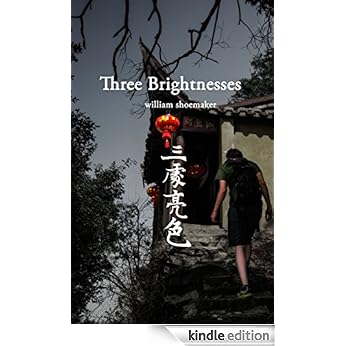
Three Brightnesses by William Shoemaker
I enjoyed reading Will’s memoir because, having lived in China a long time, I can relate to the things he wrote about – the place, the people, the culture, what one can like or dislike about them. Several times while reading this book I laughed so hard, and I think that’s a good way to judge whether a writer is good or not – if he/she can make you cry or laugh.
Will speaks fluent Mandarin, dated Chinese women, has Chinese friends with whom he can speak Mandarin. And yet, I don’t think he has ever felt at home or that he belongs.
One of the things he said that resonated with me is this: “In China, no one waits. Nothing stays the same for long. You can try to understand the place, but anything you learn, the moment you learn it, becomes an artifact of the past. The thing that doesn’t change is the memory – the version of the place that you knew.”
If you’re thinking of moving to China or are interested in China or the Chinese culture especially as it is now, read Three Brightnesses.
The second book is called Lost in Translation by Nicole Mones. What attracted me to this book is the quotation from Pierre Teilhard de Chardin’s book The Phenomenon of Man, right at the beginning of the book, which goes,
“Since the inner face of the world is manifest deep within our human consciousness, and there reflects upon itself, it would seem that we have only got to look at ourselves in order to understand the dynamic relationships existing between the within and without of things at a given point in the universe. In fact so to do is one of the most difficult of things.”
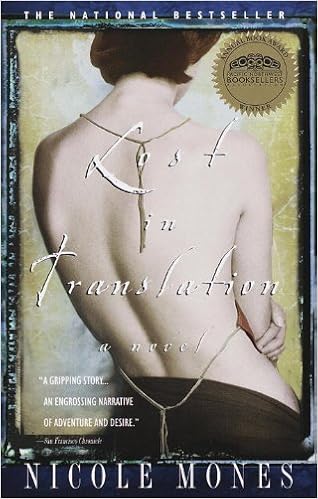
The novel is about a thirty-something American woman who is running away from her troubled past (being the beloved daughter of a racist politician), and wanting to start a new life and to find love (in the form of a Chinese man, had to be Chinese), in China. (Why is it so easy for Asian women like me to accept a relationship between a western man and an Asian woman, but we tend to be surprised or even shocked, incredulous when we hear of relationships between western women and Asian men? Well, I know my answer to that one, but I would really like to know how other Asian women think!)
The main character, Alice, being fluent in Chinese, works as translator in Beijing. She translates for an American archaeologist who is doing a research on the Peking Man. Being in China, the American archaeologist has no choice but to work with Chinese archaeologists, one of whom is Lin Shiyang whose main reason for joining the team is to be able to track his wife who was put in a labor camp in the northwest of China during the Cultural Revolution. Shiyang and Alice fall in love, but right after he finds out for sure that his wife died years ago in the camp, he also finds out about Alice’s promiscuities. But that’s not the ending. You will have to read it to find out how it all ends.
It’s a story within a story, as the writer leads us to the story between Pierre Teilhard de Chardin and Lucile Swan in the early 20th century, and the love story between Alice and Shiyang in the 21st century.
After reading this novel, I promised myself I would read The Phenomenon of Man.
But I ended up reading Forty Rules of Love by Elif Shafak, which, just like Lost in Translation is a story within a story. The main character in the 21st century is a 40-year old Jewish-American woman, Ella, married to a successful Jewish man and together they have three children, the eldest being in college and the youngest in elementary school. For twenty years she lived what seemed the peaceful and content life of the perfect wife and mother. But one day, she reads a book called Sweet Blasphemy written by a man called A.Z. Zahara, and this book changes her and her life forever. While we are reading about Ella and her life and her consequent meeting and falling in love with Aziz, we also get to read Sweet Blasphemy which is about the spiritual friendship between two Sufi mystics, Rumi and Shams of Tabrizi.
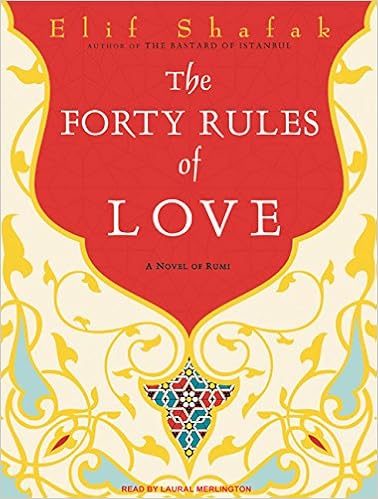
Forty Rules of Love by Elif Shafak
This novel contains so many quotable quotes all from Shams’s Forty Rules of Love. One of my favorites is
“There is only one way to be born into a new life: to die before death.”
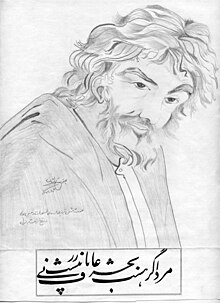
Shams of Tabrizi
In the novel, Ella’s new life entails leaving her husband (he was cheating on her anyway), and her three children, to be with a man she just met and whom she “loves”. I put love in quotation marks, because even after reading the novel and Sham’s Forty Rules of Love, I do not consider passion as love. How can you truly love somebody you just exchanged emails or text messages with? To finally meet that person and find he is even more interesting than the one you have been texting with may be very exciting indeed, but excitement does not equal love. And finally I cannot see any justification for leaving one’s children to pursue one’s happiness. Perhaps if the children are old enough to live without both parents. But for little children, I can only imagine the difficulty of growing up without both parents to guide you and make you feel secure in this world. But I have to say this, leaving a philandering husband is perfectly fine, (also the husband who forgets his wife’s birthday and their wedding anniversary, yeah!) I salute women who do so.
That said, I am grateful for this novel for introducing me to Sufism. I promised myself I would read more about Sufism, after reading about Pierre Teilhard de Chardin and the Phenomenon of Man, that is.
But Dostoevsky’s White Nights is calling….:)
What book are you reading?
Share this:

Of Exciting Beginnings and Boring Endings
 Dr. Faye Miller of “Mad Men”
“Mad Men: Tomorrowland (#4.13)” (2010)
Don Draper: I met somebody and… we’re engaged.
Faye Miller: Are you kidding me?
Don Draper: I know, I know. It’s a surprise. It was for me, too.
Faye Miller: Jesus. Who is she?
Don Draper: What’s the difference? I fell in love. I didn’t mean for this to happen. You’ve been very important to me.
Faye Miller: So you’re not going to put an ad in the “New York Times” saying you never liked me?
Don Draper: Faye.
Faye Miller: Well, I hope you’re very happy. And I hope she knows you only like the beginnings of things.
Quote Source: http://www.imdb.com/character/ch0303746/quotes
Two totally unrelated happenings I was a witness to today reminded me of this line from Faye. In fact I have never forgotten this line ever since I heard it because I think in relationships, everyone is guilty of this. Well, perhaps not everyone, but most people.
This morning in a restaurant, I sat at a table for two, and next to mine was a table for six and there sat a septuagenarian-looking couple. Instead of sitting directly across from each other or next to each other, they sat diagonally opposite each other, directly facing an empty seat. And they were just eating. In silence. Companionable silence, perhaps, but they seemed lost in their own thoughts. Only one time did the woman say something about the food without even looking at the man, and I just heard the man make a sound like “hmm.”
This scene was in sharp contrast to the text messages I was receiving from my friend, who has met somebody new whom he says he’s not interested in romantically, but who he cannot stop talking about. His excitement over a new person he has met (and this has happened several times in the few years I’ve known him) amuses me. I enjoy observing his reaction and understanding how men think, and reminiscing the times I, too, got excited about meeting somebody new.
When you meet somebody new that you like, you cannot stop thinking about them and getting in touch with them and telling your family, friends, and anyone who’s willing to listen, about how wonderful/cool/nice they are. To me, it’s like being in high school all over again, where every word that’s spoken (now, texted or posted on social media) by said person seems to be directed at you or is related to your “friendship”; every gesture or action seems to be a code you have to decipher (when, really, there is no hidden meaning whatsoever.)
Dr. Faye Miller, being a psychologist, must know that Don’s behavior or preference for beginnings is all too common. But knowledge does not equal acceptance, especially when that knowledge hurts our feelings.
I like exciting beginnings, but I can’t bear boring endings. I don’t like how after a few weeks of “friendship”, your “friend” acts like you don’t know each other. It’s something I experienced in my youth, and I often hear from young friends who ask “Why? What happened? What did I do?” Sigh. (It’s what you didn’t do.)
One thing I’m grateful for, being in my 40’s, is the wisdom to see through exciting beginnings. Most of them don’t last. But one can work on it, I guess. They don’t have to have a boring ending. I know I wouldn’t want my husband and me to end up not looking at each other anymore, or worse, not talking. After 9 years, we still talk a lot about the things we both are interested in, and laugh at ourselves and at each other in a loving way.
I would not trade that for an exciting beginning that has an uncertain ending.
May you always have exciting beginnings that won’t have boring endings! 🙂
Share this:

Laughter and Pain

Beautiful Mindanao
In this life I think we all have good years and bad years. Sometimes when we are having a good year, we ask (like I often do), “Do I really deserve this? Have I been really that good to deserve all these wonderful things?” And when we are having a bad year, we ask (like I ALWAYS do), “Seriously. What have I done to deserve this?”
And I’m having a bad year. It has gotten so bad that now I could laugh at an unfortunate incident my husband and I found ourselves in yesterday. It struck me that my life these past few months has been a black comedy.
The other day while I was doing the dishes, I thought of Job and how his faith was tested. I hope this is just a test as well, and that my husband and I will pass this test with flying colors. And that we will be laughing a real laugh, not the one tinged with pain.
I have always believed, and I know from experience that it’s true that “this too shall pass.”
There’s always light at the end of the tunnel. 🙂
Share this:

When Love Goes Wrong

Life goes on
“There is always something ridiculous about the emotions of people whom we ceased to love.” (Oscar Wilde, The Picture of Dorian Gray
The words above quoted from Wilde’s novel were spoken by my favorite character in that novel, Lord Henry Wotton
At my age, I find it nothing but mere melodramatics when people say they cannot live without a particular person in their lives.
Of course I have been in that situation myself when I thought my world had ended because a particular person who I had made responsible for my happiness (and consequently, unhappiness) left me.
There is something inherently wrong in the belief that one cannot live without a particular person in their lives. First is that another person can be responsible for one’s happiness. Second, that one’s world would end when that person is gone.
No one else is responsible for our happiness except ourselves, and the world can and will really continue to exist with our without a particular person in our lives. If you tell a jerk (because even a jerk can fool somebody into loving him) that he is your life, your world and that both would come to an end if he leaves you, then you are giving him enormous amount of control over your life. Not smart. And if you tell an honest and responsible man the same, then you are giving him undue pressure and undeserved feelings of guilt whenever you are unhappy (which may be your aim, and that makes you the jerk.)
When you are truly, madly, deeply in love you seldom think clearly, logically. But when that period comes to an end, then it is like you have just recovered from a psychological cataract, and you see, if you’re lucky, the purity and selflessness of your love, or if you’re unfortunate, the silliness of your thoughts and actions.
When you fall out of love, you become this person that is able to distance yourself from the relationship and see yourself and the former object of your affection and the dynamics between the two of you, like the two of you are characters in a movie or in novel whose plot not only you can relate to, but also you can analyze and comment on objectively.
At first you may feel pity for the spurned person, especially if you have “lost that lovin’ feeling,'” but they haven’t. You may feel dislike or disgust for them, especially if they had betrayed you. Or you just may find them irritating when they cannot let go and keep trying to win back your love.
I think most people have experienced breaking up with someone or being let go by someone. If you broke up with someone that you ceased to love, then whatever they say becomes mere hollow sounds to you. If you’re polite, you will pretend to listen and do a mental eye-rolling when they tell you those saccharine words that you used to love to hear them say to you:
You are my world.
I can’t live without you.
You complete me.
Duh.
Or …
D’oh.
For those who cling to a lost love:
The pain of unrequited love is real. But you have to move on because:
1. It’s not the end of the world. Really.
2. You are responsible for your own happiness. No need to pass that responsibility on to somebody else
3. You CAN move on.
4. You WILL move on.
Let go but don’t let yourself go.
Share this:

Childhood Memories

I watched the movie “Lucy” sometime ago and thought the first half of the film was interesting, and then it just got stranger and sillier until the end. But one scene that stuck with me is the phone conversation Lucy had with her mom, where she told her she could feel everything, remember everything vividly, as if they happened just a few seconds ago. She could remember how her mother kissed her when she was still a baby.
Would you like that? To remember everything so vividly? I am guessing most people would like to remember just the happy, beautiful times and not the painful ones. In fact most people would prefer to forget the pain they have gone through.
When I was a little girl, being the youngest, I was very affectionate with my mother. I always liked kissing and hugging her and being kissed and hugged in return. She always smelled of Johnson’s Baby Powder, and I liked that. I went on being like this even when I was already in my late 20’s. My sisters used to tell me off telling me it was disgusting that I still acted like a baby when I was already an adult. But it never bothered me what other people thought.
Those are not the only memories I have of me and my mother in my childhood though. I also still vividly remember the times my mother got angry with me and my sisters. I would not say it was a typical Asian way of discipline, but it was quite common to be hit and scolded in front of family and friends or even strangers. My sisters and I sometimes talk about those times with a little sadness and a lot of laughter, but my mother remembers nothing of those times she was not gentle with us.
Yes, I remember them as well, but those hugs and kisses are the more powerful memories.
So now that I, myself, have become a mother, I hug my son tightly as often as I can, hoping he will never forget how much his mom loves him and makes him feel loved. I want him to always remember the loving look his mom gives him, and how when he is scared or hurt, his mom comforts him and makes him feel safe.
It is useless to wish he won’t remember the times I get angry with him, but I hope those memories will not be as vivid as the beautiful ones.
One of my favorite scenes from Dostoevky’s novel The Brothers Karamazov is at the trial of Mitya (Dmitry) when Dr. Herzenstube was called to the witness stand. He recalled a time when he saw Mitya as a little boy, “barefoot, his little trousers held up by a button…” He felt so sorry for him, knowing that Mitya’s father cared little for the boy, and decided to give him a pound of nuts. After that he did not see Mitya again, until twenty-three years later, a young man came to visit him and reminded him of his generosity. This young man said to him, “I’ve just come to town and I want to thank you now for the pound of nuts you once gave me, because you’re the only person who has ever given me a pound of nuts in my whole life!”
What happens in our childhood may have a major impact in our lives as adults. We remember things that happened to us when we were children as if they just happened yesterday. Some may be good, others may make us cringe or angry.
What’s your best childhood memory?
Share this:

Cure for Self-Absorption

So why a picture of the sea? When I stand on the shore and look at the vastness of the sea and the horizon, I become very conscious of how tiny I am in this universe. And I am filled with emotions that I can’t really describe. Is that what happens when the soul is praying?
A sudden downpour, and for reasons I don’t really know, I remember days I spent at the convent (when I tried to become a nun.)
One of the things I liked about being there was doing the evening prayers with the Sisters. We read from the Breviary and then there was a part for personal intentions, where the Sisters (and later I, myself, having learned from them) prayed for other people we did not really know – the ones in hospitals, those who were traveling, the lonely, etc.
Looking back, I find when we think of those who are suffering and try to feel what they are going through, then we not only realize that other people are suffering so much more than we are, but also we become less self-absorbed and consequently avoid magnifying our troubles.
Right now I’m hearing someone complain about his job, and I think of those who are desperate for a job.
I pray (to God if there is one) for the people of India suffering from the heat wave, that their suffering will come to an end.
(Now I know the reason for remembering: a friend texted me about cloudburst, to which I replied “better than heat wave in India”, then I remembered days I spent in the convent.)
Share this:

Love and Anger from Boredom

One day many years ago, when I was still young, free and single, I spoke with a colleague/friend who was only a few years older than I, about a boy who had been calling me almost every day for several months and then one day just stopped. I was telling my colleague/friend, who was married with two toddlers, that I could not stop wondering what happened, and that I could not sleep just thinking how it could just end like that. She looked me straight in the eye and said to me, coldly, “You do not have real problems, so you invent problems.” (I miss you, Nancy GRO.)
I do not know how anyone else would react to that, but I laughed. And even now, I laugh when I remember it. Indeed, that was not a real problem.
A few weeks ago, I re-read “Notes from the Underground” by Fyodor Dostoevsky, and I highlighted the quotes below as I know I have been guilty of these things myself too many times in my youth, and a couple of times in adulthood.
“How many times, for instance, I’d take offense, out of the blue, for no good reason, deliberately; I’d know very well that there was nothing to be offended at, that I was playacting, but in the end I’d bring myself to such a state that the offense would become real.”
“Or else I’d try to force myself to fall in love; in fact, I did it twice. And I suffered, gentlemen, I assure you I did. Deep down in your heart you don’t believe in your suffering, there is a stirring of mockery, and yet you suffer – in the most genuine, honest-to-goodness way. I’d be jealous, I’d be beside myself…And all out of boredom, gentlemen, all because I was crushed by sheer inertia.”
We sometimes think people have offended us, when, in fact, if we had important things to do or think about, we would not even remember what they said. And sometimes, when people have nothing to do, they imagine being in an amazing place, with an amazing person living an amazing life. And then this imagination can lead to the illusion that one is in love, when in reality, there is nothing amazing about the subject of one’s imagination.
Idleness can lead to love or anger, both of which may be mere illusions.
One ought to have time for quiet, for introspection, (I maintain that being quiet or introspecting is not the same as having an idle mind) but one also needs a distraction from the tediousness of daily living – a distraction that needs action. Hence, the need for a hobby. As an introvert, I am happy to add photography and guitar-playing to my list of hobbies that include reading and writing.
What’s your hobby?
Share this:

Schadenfreude and the Sick Mind

RIP, SFP.
SCHADENFREUDE AND THE SICK MIND
I just finished re-reading Dostoevsky’s The Idiot and thought about how the most important characters all seem to have mental problems. The most interesting characters are the eccentric ones, and the dull ones are the very normal people.
Rogojin loved Nastasia, even though she kept humiliating him in public; but, that love eventually turned to hate and led him to murder her. When she died, he kept her body in his house and watched over it. He did not laugh at her death. He was sick, but he was not happy that she died.
Myshkin understood and did not condemn Rogojin for killing his bride-to-be. They called him the “idiot”, but he was the only enlightened one among all the characters. “The Idiot,” just like “Crime and Punishment” and “Brothers Karamazov” (my number 1 favorite novel), made me think about a lot of things – about myself, my family, friends, and life and death. I started re-reading it at a time when, someone I know, was dying.
After reading the book today, I read, not a fictitious story, but a true-to-life one of a person in terrible pain and with only a few hours to live being visited by some people who made jokes and laughed loudly in the room. Perhaps they did not realize the person was in pain? I do not think it is hard to tell if a person is in pain, especially when they are groaning.
As a child, I was scolded by my father for making my sister laugh while our other sister was crying because she was itching all over from an allergy. Back then I thought what’s wrong about laughing? We were not laughing at or about her. But before I could say anything, my father said, “When somebody is suffering, you do not make light of their suffering by laughing.” It is not only rude, it is evil.
In our life, there are people who love us and those who hate us. There are people who like us, dislike us, or to whom we mean nothing. Being an introvert, I have very few people, apart from my family, I trust and truly like. But should I find myself dying, I would not want anyone except for my immediate family to see me on my deathbed. I do not want visitors who may only come to see how much I am suffering and be happy to see me thus.
Because believe me, there are such people. They look quite normal, so normal that they even managed to graduate with a bachelor’s degree even though they cannot spell their names correctly. They look good and are very sociable. They walk with a swagger even though their stomachs are sticking out. They speak loudly in front of their acquaintances but simply to sound important. Yet what little knowledge they have is simply based on hearsay, God knows if they have even touched a book!
These people enjoy watching others suffer. It is difficult to understand because they are supposed to be “normal.” I can understand a mental patient laughing at someone who had been run over by a car, because the person is mentally sick. He has no control over his thoughts and feelings. I can understand a drug addict laughing at someone who fell down the stairs because his brain has been corrupted by drugs. But how to understand people who are not into drugs, talk normally, act normally in front of most people yet laugh at a dying person?
How are people like these different from the rebels who tortured the 44 SAF and laughed while they were doing so? I find these supposedly “normal” people scarier than the MILF rebels who killed the SAF. We can stay away from the MILF. But, these “normal” people are scarier because they live amongst us, watching us, waiting for us to fall, so they can laugh their evil laugh. But they do not scare me. I know their kind, and they can never come near me or my family.
They laughed as she lay dying.
MENE, MENE, TEKEL, UPHARSIN.
Share this:

Living not thinking
I’m on holiday. Sort of. I’m home for 7 weeks. And this is the end of the second week. I’m on holiday from work which means I’m a full-time mom, and because I’m home, I am also daughter, sister, aunt. It’s great being with family, but being home means I am hardly ever alone. I’m enjoying being surrounded by family and being busy living, but I sure miss being quiet and thinking.
Today I went for an early morning swim with my sister and my niece. I spent a couple of minutes just floating on my back and looking up at the sky and just … looking up at the blue, blue sky. It was nice.
The time to think will come. For the next 5 weeks, I’ll just enjoy living.


It rained last night, but we had beautiful weather this morning.

View from the restaurant where we had breakfast


Share this:

Introspection thru “Predestination”

I got this photo from this site.
Science-fiction is not really my favorite genre, but my friend was sure I would like Predestination because (1) It’s an Ethan Hawke movie, and (2) he thought it was a mind-blowing film.
I certainly do not regret watching this movie because there are a couple of things I like about it, apart from THE Ethan Hawke (who still looks as gorgeous as when he was in his 20’s! Dang!)
It may be an Ethan Hawke movie, and he is great in it (as he is always in his movies), but I find Sarah Snook’s performance impressive. My favorite scene in the movie is when she as the androgynous Unmarried Mother (looking like Leonardo DiCaprio in Titanic) speaks with her young self, and her face is filled with emotions of love, understanding, compassion — all blending together in that facial expression of hers. Of course, I admit that part of that is merely my own perception. But in my humble opinion, she did a magnificent job in this movie.
The last movie I saw and wrote about was Interstellar, another science-fiction film I did not expect to like but ended up liking so much. I liked the interpersonal relationships present in Interstellar – the character’s relationship with his children and with his fellow astronauts. But, as a person fond of introspection, I liked the intrapersonal relationship the character of Predestination had with himself/herself at different periods in his/her life.
My very limited understanding of physics (I didn’t really listen to my teacher), and science-fiction and the ideas of time-travel and the predestination paradox perhaps limits my understanding of the movie, but I will not spend another night trying to reconstruct the sequence of events in the movie. I am content to focus on the ideas that caught my attention. I do not totally understand it, but there are certain things that like about it and that made me think.
Revenge
What if I could put him in front of you? The man that ruined your life? If I could guarantee that you’d get away with it, would you kill him?
Would you avenge yourself on the person that ruined your life, if you were assured it could be done with impunity? Hopefully none of my readers have their lives terribly ruined by somebody that they would want to end that somebody’s life, but how about revenge?
“Nemo me impune lacessit.” No one harms me with impunity.
An eye for an eye. A tooth for a tooth. There is no such thing as throwing back a piece or bread (or mantou) to someone who threw stones at you.
Forgiveness, that abstraction that is quite easy to speak about (especially if the one speaking of it is not involved in the situation where it is being sought) is extremely difficult to translate into action. Hence, people often seek revenge for every pain that another person caused them.
But upon closer examination, what does one get from revenge? Is there joy that comes in having avenged oneself? Can one sleep better at night knowing another person is now suffering from one’s revenge?
The irony in the Unmarried Mother’s desire to avenge herself was that she was the transgressor herself. When she found out that it was herself all along that ruined her own life, then she felt compassion towards and even loved herself.
I would look at transgression in two ways: one can endeavor to be empathetic and see things from the point of view of the transgressor and understand why he did what he did. Or, one can accept the fact that no one can ever transgress anyone with impunity. Not even as an act of revenge. Countries have laws. People have conscience. When you hurt other people, you hurt yourself as well. (Or am I wrong? Are there “normal” or “typical” people who rejoice when others suffer, people who have nothing but Schadenfreude in their hearts?)
Jane/John as the bartender, however, could not forgive himself as the Fizzle Bomber and shot him. The same person who was able to understand and accept the one who ruined his/her life, could not forgive himself for killing other people.
Question for Introspection 1:
Is it easier to forgive the harm we brought upon ourselves, than it is to forgive the evil we brought upon others?
Narcissism
Growing up, Jane felt she was a freak, that she was ugly. She even stopped looking at herself in the mirror. This self-loathing became even worse when she found out she had the rare condition of having both male and female reproductive organs and was left with no choice but to undergo surgery to become male.
But when Jane who is now a man with the pseudonym Unmarried Mother goes back to her/his past and meets her/his young self, she/he says to her/him, “You’re beautiful.” She/he falls in love with herself/himself and even has a baby.
(Now this just came to mind as I was typing the previous sentence: isn’t that the same idea as the Divine Trinity? The Father , Son and Holy Ghost? Which came first?)
Question for Introspection 2:
If it were possible to see yourself from the eyes of someone from the opposite sex, do you think you would fall in love with yourself? Do you have the traits that you find attractive, enough to fall in love with another person?
We sometimes love ourselves and sometimes hate ourselves. But to fall in love with oneself, this is something I have only read about or seen in movies. I still have to meet somebody who admits he or she is in love with himself or herself.
Question for Introspection 3:
If you could meet with your 20-year old self (I’m assuming my readers are at least in their 30’s!) what would you say to him/her?
Would you be kind and perhaps encourage yourself? Or would you warn yourself of the many mistakes you would be making? Or would you tell yourself, “There’s nothing to look forward to.”
And what do you think your 20-year old self would say to you? “Nice job! I can’t wait to become you”? Or, “Uh-oh!”
Self-loathing
It is interesting how people can love and hate themselves at the same time. We love certain qualities about ourselves, and hate other qualities that we possess and wish we could change ourselves.
Through time-travel, John is able to meet with his future self, the Fizzle Bomber who has killed thousands of people. When John comes face to face with the Fizzle Bomber, he says with loathing, “I will never become you!” And shoots him.
We have no way of knowing what we will be like 20 years from now. But we can look back at our lives and see what we have become.
Question for Introspection 4:
What do you think a 20-year old you would say to the present you if he/she could speak to you now? Will he/she say: You’re doing a great job! Or will he/she say, “I will never become you” and….
Like I said, I do not totally understand this film, but it’s an Ethan Hawke movie that got me thinking, so I like it. This movie, perhaps, had an effect on me, and when you read what I’ve written, maybe it will have an effect on you, too. Hopefully a good one.
“When a butterfly flutters its wings in one part of the world, it can eventually cause a hurricane in another…” – Edward Lorenz
Share this:

On Shopping and Men who Like/Don’t Like to Shop

A shopping mall just across the street from the uni. A lot of students have part-time jobs in this mall.
The other day I had an interesting discussion with my girl students about shopping which 99% of them listed as their number one hobby.
Before coming to China, I never personally knew anybody who listed shopping as one of their hobbies. Shopping was, and I think, still is, a luxury in my country.
Talking with these young people about shopping made me feel I was old (which I am) and/or strange to them (I probably am.)
They say they do not ever go shopping alone. I almost always prefer shopping alone. They say they like going from shop to shop until they find the one they like best. I will check out two shops at most and then give up. They can shop all day; I can only last two hours, I’d rather get my nails done or eat! They have the patience of a saint when their picky friends cannot find the item they like; like I said, I prefer to shop alone and the number one reason is: I shop like a man. Or do I?
I always thought men were not into shopping. And that if they were, they would not have the patience to compare prices and quality, blah-blah.
Then years ago, I met best friend number 2. One time, we went to the mall because he was going to buy me two pairs of shoes as his Christmas present for me. It did not take me a long time to find the ones I liked, but he disapproved of my taste saying the ones I liked were old fashioned or of poor quality, so after at least three hours in the mall (in another city!) we finally found two pairs that he was happy to buy for me. Because he has always had good taste, and he paid for them, I only complained in my head.
Best friend number 2 is not alone. Best friend number 1 (a.k.a. my husband) is just as picky and patient when it comes to shopping. One time he was also going to buy me a pair of shoes and did not like the ones I liked. He insisted on going to other shops to look, so finally I said I did not really need a new pair, and a few days later, went out shopping by myself.
When it comes to online shopping these two men are even worse. For a couple of months, best friend number 2 (perhaps because he missed the easy life in his home country after working long hours in the States) did not leave his apartment and just ordered everything, practically everything, online and had them delivered to his doorstep. That included his breakfast, lunch and supper. I knew because I saw the goods delivered while we were chatting online.
My husband too can spend hours shopping online. Several times a week for a couple of months this year we had something delivered. They were either books or toys for our son, or teaching materials that he could use to teach our son. (Time and money well spent, so I do not complain.) But yes, he could and still can sit in front of the computer for hours, not programming but shopping!
This makes me wonder if it is only East Asian men who enjoy shopping.
I remember a few years ago, when I was a little more sociable, I asked my non-Asian guy friend if he wanted to go shopping with me (back then there was no female colleague I could hang out with.) Since he did not have anything else to do, he said OK. We were already near the shopping street when he asked me, “So what are you shopping for?” Then I said, “I don’t know yet. I’ll have a look first.” The look on his face was priceless.
Another time, I was grocery shopping with another non-Asian guy friend after lunch, and I wanted to buy plates but couldn’t decide which of the two different plates looked nicer. So I asked him which one he thought was prettier, and he went, “Oh come on, they’re plates. Just pick one. Then, let’s go.” I could not get angry, in fact I laughed because it was exactly what I would have said if somebody had asked me.
Share this:

Will you remember…?

I love the melancholic sound of the erhu
I took this picture morning of Christmas Eve while I was walking at the park. I’ve always loved the melancholic sound of the erhu, so when I heard it, I walked towards where the sound was coming from and saw this old man facing the pagoda as if he was playing for the one for whom it was built. Fortunately for me, he turned around and, click! I took a photo.
The ever sentimental me imagined the old man was probably playing for his grandfather or great grandfather, and I thought how nice it would be to be remembered the same way by the ones you leave behind. (Of course the practical and realistic part of me has something else to say.)
That night, Christmas Eve, my husband and our friends and I talked about death instead of having dessert after dinner. It came about after our friend complained about being over 60 and feeling that he was getting really close to the end. I just laughed at him saying 60 wasn’t old, and I remembered crying when my father turned 60 as I thought he was going to die soon, but he lived to be 81.
It was not the first time we talked about death instead of having dessert. I remember another time when I thought aloud about dying and nobody would be coming to my funeral because I have not lived in my hometown for a long time, and my friends have also left. My husband, who is introverted, felt the same way. And so did our friend who was in his early 50’s then.
But really, does it matter? Would we even know?
I would like to think my father is aware that we have not forgotten him, that I have not forgotten him. That I light candles for him on important dates, and I smoke a cigarette on his birthday and on All Soul’s Day, that I visit his grave whenever I go home and again before I leave. I do all these because I want to, because I like remembering him, and I want him to be happy, just in case he is aware of these things.
My husband once asked me if I thought our son (this was before our son was diagnosed with ASD) would ever visit his (my husband’s) grave in his hometown in the north of China on Tomb-sweeping Day. He was a little shocked by my blunt and totally unsympathetic reply: “Are you crazy? Why would you burden your son to travel every year just to visit your grave? You would not even be there anymore!” I did apologize for the bluntness, but he admitted it was a burden.
I don’t want to be buried. I want to be cremated, and my ashes scattered in the sea in my hometown or any sea really. Or, if Eli, by that time is already capable of feeling love and loss like typical people do, perhaps he can keep some for himself that he can carry around with him wherever he goes. And if the dead me sees that, I would be truly happy.
I think we all want, desire to be remembered by people we love. But when we’re gone, it doesn’t really matter if they do or they don’t, does it?
Remembering is only for the good of the living, not of the dead.
Share this:

The Egret on Campus II

Alone but not lonely
Every Chinese person I know feels uncomfortable being alone. I still have to meet one who is happy at being able to spend one day alone. Even my monk friend is very sociable and enjoys being with people all the time.
At first I thought it was just the young Chinese who feel this way, until one day my husband asked his mom if, when she was young, she had ever spent one day alone not talking with anybody, and she said never and that it would be terrible not to have anybody to talk with for a day!
From the conversations I had with most people, young and old alike, I get the feeling they think of introversion as some kind of disorder, and that people have to be outgoing. If a person is a quiet type or prefer to be alone, then they think that person is strange.
Today, Christmas Eve, I saw the egret on campus again. It seems it survived the (relatively) cold winter alone. Of course there’s no way of knowing if egrets can feel happiness or not, but it did look content to me as it searched for food in the shallow water. Seeing the egret again (if it is the same one) reminded me of my conversations with people about being alone. It seems hard for many to accept that one can be solitary but not lonely. Especially in China where people swear they cannot survive spending a day without anybody to talk with, or where you can hardly meet an unmarried person over 30 because if they are 25 and still single, their parents would panic and set them up on blind dates, the idea of solitude is as unimaginable as dying without having contributed to the population of the race.
But I think of the single people I know (not Chinese), and the ones who always find time to be quiet, and I see them more content with their lives than the ones who are more sociable and go out often. They certainly have fewer worries than those who are married or those who have several circles of friends. For one, single people who do not have children do not have to worry about their children and the children’s tuition and their future. For another, they enjoy the freedom that most married people or parents can only look back to with a sigh. They have more time to devote themselves to developing their talents and focus their energy on their interests.
As a wife (to a man who has a different cultural background), mother (to an autistic toddler) and a teacher (who faces a class of 35 students 14 hours a week), I insist on having as much time alone as I can. I go out for walks and have lunch or coffee alone. I get stressed when I am CONSTANTLY with people, be they family or friends or acquaintances. I guess being Asian and living in a country such as China where people are so eager to give you their two cents and feel guilty if they have no advice to give even when you do not really need one (they mean well, of course) , it can be overwhelming to be in the company of people.
So I can truly understand people who want to be alone and are content to be alone. One can be alone and still find contentment. In fact like I said in another post, we all need to experience alone-ness. We all need to be solitary sometimes and to experience solitude. As Thomas Merton once said: “It is in deep solitude that I find the gentleness with which I can truly love others. The more solitary I am, the more affection I have for them.” May you find time for solitude and consequently find love and contentment in your life.
Merry Christmas!
Share this:

Writer’s Block (Or, Where’s Bradley Cooper when you need him?)
People inspire me. What they say and how they behave are ideas that get me writing. When they leave or just disappear from my life, I will be inspired to write some more for a week or two, and then there will only be silence.
No amount of free writing will make me come up with something I’d be happy with.
I can write a rant about a number of things, but I feel I am too old to be making my rants public. I’m supposed to have better self-control and calm that go with age.
At the moment I have zero inspiration for any creative thinking. It is too bad that one’s spouse can’t be an inspiration. My husband is a wonderful person, my best friend number 1. A witty, sometimes very funny and intelligent man. But he is so real to me. So real. And I say that with love.
What gives me inspiration is having people around me who can call forth my imagination, and right now my brain’s a desert.
Where’s Bradley Cooper when you need him?

There he is! Got this pic from this site.
Share this:

Sunday Coffee

My fave coffee shop needs no advertising, so I’m using this photo instead which I got from this site
She decided not to ask him to meet up with her this time. No pressure. She knew he was busy. She would just wait for him to ask her out. And it happened on a Sunday morning. He invited her to have coffee with him. She was walking down the road going to the coffee shop when something told her to look behind, and sure enough, he was pulling up to let her inside the car.
She thought she had changed, that “it” was no longer there. Yet, as she sat next to him, and watched him drive, she realized, “it” was still there. That high-school-girl feeling of actually sitting next to the guy you really, really like. And she just sat there, not flirting, not trying to be cute, just enjoying the feeling of youth and excitement.
And that felt good. To know that even though she was now with somebody else, and he was with somebody else, and they could never be what they used to be, share what they used to share, that she could still feel like this when she’s with him .
She didn’t see him again after that Sunday coffee. Yet it was enough. She had her fill.
Share this:

New Year’s Resolutions (Or, how to keep my sanity in 2015!)
From elementary school through high school, we were always made to write a composition called “My New Year’s Resolution” before Christmas break. That was always the last formal theme writing topic.
Believe it or not, every year I still write down my resolutions on my journal. Reading my journals from previous years, I find I managed to keep some for a year or longer; but mostly I failed.
For 2015 and the coming years, I resolve to be kind not only to others, but to myself most of all. I am too old to be making the same mistakes and hurting myself the same way I did when I was 20!
So here are my new year’s resolutions. What’s yours?
1. Don’t be too proud, be humble.
2. Don’t be vindictive, be forgiving.
3. Don’t expect too much from people you care about, be patient with them.
4. Don’t care too much about the lives of the people you care about, live your own life.
5. Don’t forget you’ve made these resolutions before, be mindful of them.

A beautiful day in Jimei
Share this:

Love in the time of Computers
How many times have I fooled
Myself into hoping
That you’d come
Knocking at my door
To surprise me
To make me smile
Like you used to.
Why is it so hard
To store in this brain
That you had moved on
But left everything
For me to process
And decode the meaning
Of your sudden leaving.
Isn’t it enough
That you had left
(Not the country,
Though I sure wish you would!)
And that you see me
See you happier
Without me?
But ah, this brain
This brain has faulty programming.
Its memory is full.
It cannot store new data
And none can be deleted.
It can only self-destruct,
In due time.
Share this:

On Growing Old
“I grow old… I grow old… I shall wear the bottoms of my trousers rolled.”
-T.S. Eliot
I have a lot on my plate lately, and don’t have the time to be quiet nor to have a good conversation with people I can really talk with, so yesterday as I sat down to rest for a few minutes I thought about how many strands of white hair could be growing out of my head. I decided to just laugh about life instead of worrying about it. I’m not ready to dye my hair.
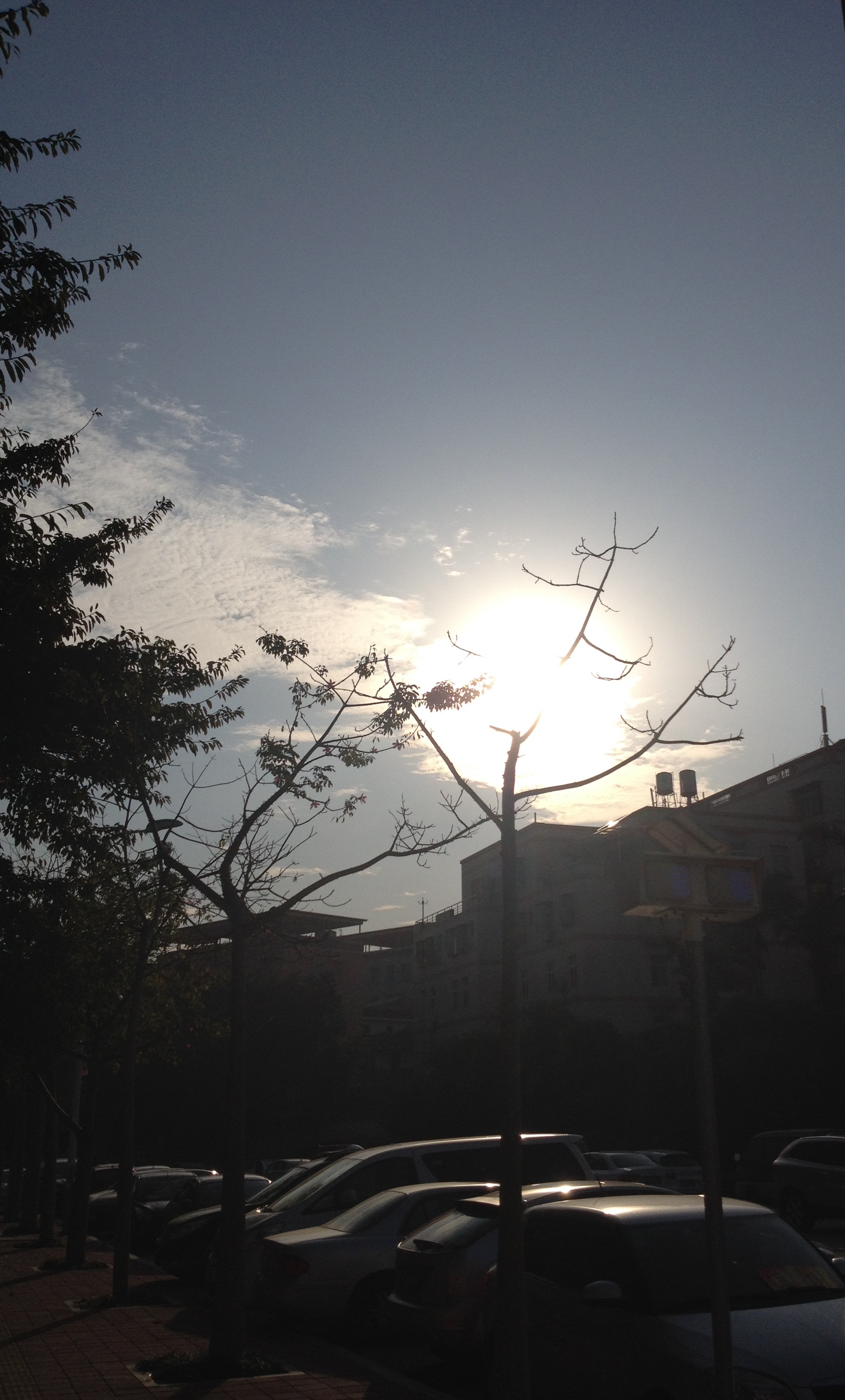
Winter afternoon sun in Jimei
With every misfortune,
And every disappointment,
And angry and hurtful words,
With every neglect
And every apathy
And unwelcome silence,
I can feel white hair
Growing out of my scalp.
I swear I can hear each strand
As it wriggles its way out.
And I look at myself in the mirror
And I look for those strands of white
There’s one close to the right ear
And another one by the hairline,
And then there’s none.
Perhaps those two came out
Because I worried
That because I worried,
I would grow old.
Share this:

The Yellow Flower

Rain falls on the yellow gladiolus.
Like gentle kisses on its petals,
Glistening in the light,
Droplets of rain
Draw its beauty out.
Alone among the reeds,
It blooms and opens
And looks up to the sky
And welcomes the rain
That gives it beauty, life.
Somewhere else
There’s a white gladiolus
But for now, alone among the reeds,
The yellow gladiolus is happy to be yellow
And to be kissed by the rain.
********
It was drizzling when I walked to work today. I stopped by the wooden bridge to have a closer look at this yellow gladiolus that stood alone among the reeds by the lake. Beautiful. I thought it looked even more beautiful with the raindrops on its petals.
And then…
Share this:

Interstellar and the Self

Interstellar
First off, if you have not seen the movie yet, then stop reading.
Second, if you are a film enthusiast or a film critic, then pardon my own humble review of the movie. I am often told that I miss the point of a movie, to which I reply (but only in my head), so what? I see other things in a movie that move me, and to me that is what matters. I do not have to have the same analysis as everybody else. Our understanding and appreciation of a movie or even a book is ultimately shaped by our own individual experiences, our knowledge of the things around us, our values, culture and many other factors.
That may have sounded like an attempt at apologetics, so I will move on.
I watched Interstellar a week ago, but waited until today to write about it because I had to give myself time to think and discuss with my husband (a physics major in university) about one of the ideas the movie presented that really fascinated me.
Cooper (not my dearest Bradley), Matthew McConaughey’s character, left earth and entered another galaxy through a wormhole. His travel with the other space explorers took, for them, just hours, but what was hours for them was years for the earthlings.
I cannot and will not even attempt to explain how the element of time was used in this story, but in my own simple understanding of what happened and in my humble second-language-learner English, let me say that Cooper was able to go back to a certain place in time, specifically that period when his daughter thought there was a ghost in her bedroom that was trying to tell her something. It turned out that that “ghost” was actually Cooper himself, from the future, (future Cooper) trying to stop past Cooper from leaving his family. But then he was told he could not change the past.
Let me pause here to say something about Biblical allusions or religious undertones of which there is a prevalence in today’s science-fiction movies. Interstellar is definitely not an exception. the most obvious allusion is to the man Jesus raised from the dead, Lazarus. NASA’s mission in the film is called “Lazarus.”
The Bible contains a few stories about how lives had been sacrificed for something new or better to start. Death for some for the birth of new ones, like when God flooded the world and spared only Noah and his family and a few animals; or when innocent children were killed because King Herod was afraid that the child who had been prophesied to become king was born, and he wanted to be certain the child would not live to be king; or when Jesus had to die to save the people.
In the same way, Dr. Brand had concluded that it was impossible to evacuate the whole population from earth, so he formulated plan B which was to start a new population from the fertilized embryos. He was willing to abandon the living for the survival of the species. This is not new or uncommon. I think people are constantly sacrificing other people’s lives for a cause, be they good or bad.
One other thing that I was reminded of when I saw that scene where Future Cooper was begging his daughter (who, of course could not hear him) not to let him, Past Cooper leave, was hell. Would it not be hell to be able to see our past selves making a decision that at present we know to be very wrong, but we have no way to correct it? The way we live our lives is not like how a movie is made where we do several takes. It is hell to watch ourselves making mistakes that affect not only our lives but also the lives of the ones we love and knowing we cannot undo those mistakes.
That scene from the movie spoke to me the most — the father’s anguish at seeing his daughter again and wishing he had listened to her and not left her. I love Matthew McConaughey (not the same way I love Bradley Cooper, but yes) I think he is a great actor.
That scene also made me think of “conscience,” that tiny voice in the head that tells one what is morally right or wrong, the guide to making decisions. I would like to think that our conscience is simply our “future selves” trying to guide us to the right direction. Sometimes we listen to our conscience, sometimes we don’t. Sometimes we even feel it is absent. Maybe on a holiday.
I do not like movies about aliens, but somehow I am a little disappointed that in this movie, the human being seems to be alone in the universe, that there are no other creatures out there, that it is just us in the vastness of the universe. Are we truly this special? That we have such a huge place all to ourselves? I prefer the idea presented by Stephen Hawking that there are other creatures apart from us that are way more advanced than our civilization. I would like to think that there are other beings out there, that it is not just us on this tiny planet in the infinite universe. This feeling is the same as when I stand on the shore facing the horizon and wondering if on the other side, there is also somebody standing on their shore wondering the same about the other side.
I have so many questions about our existence. I used to think the answer was in philosophy, and then in neuropsychology, but as years pass, I feel the answer can only be found not within ourselves, not within our planet, but out there in the universe, which means I may never know the answers to my questions. It is sad, but I am hopeful one day somebody will find those answers. And that hope and faith is enough to make me go on living my life, hopefully not disappointing my future self too much.
Share this:

The Egret on Campus
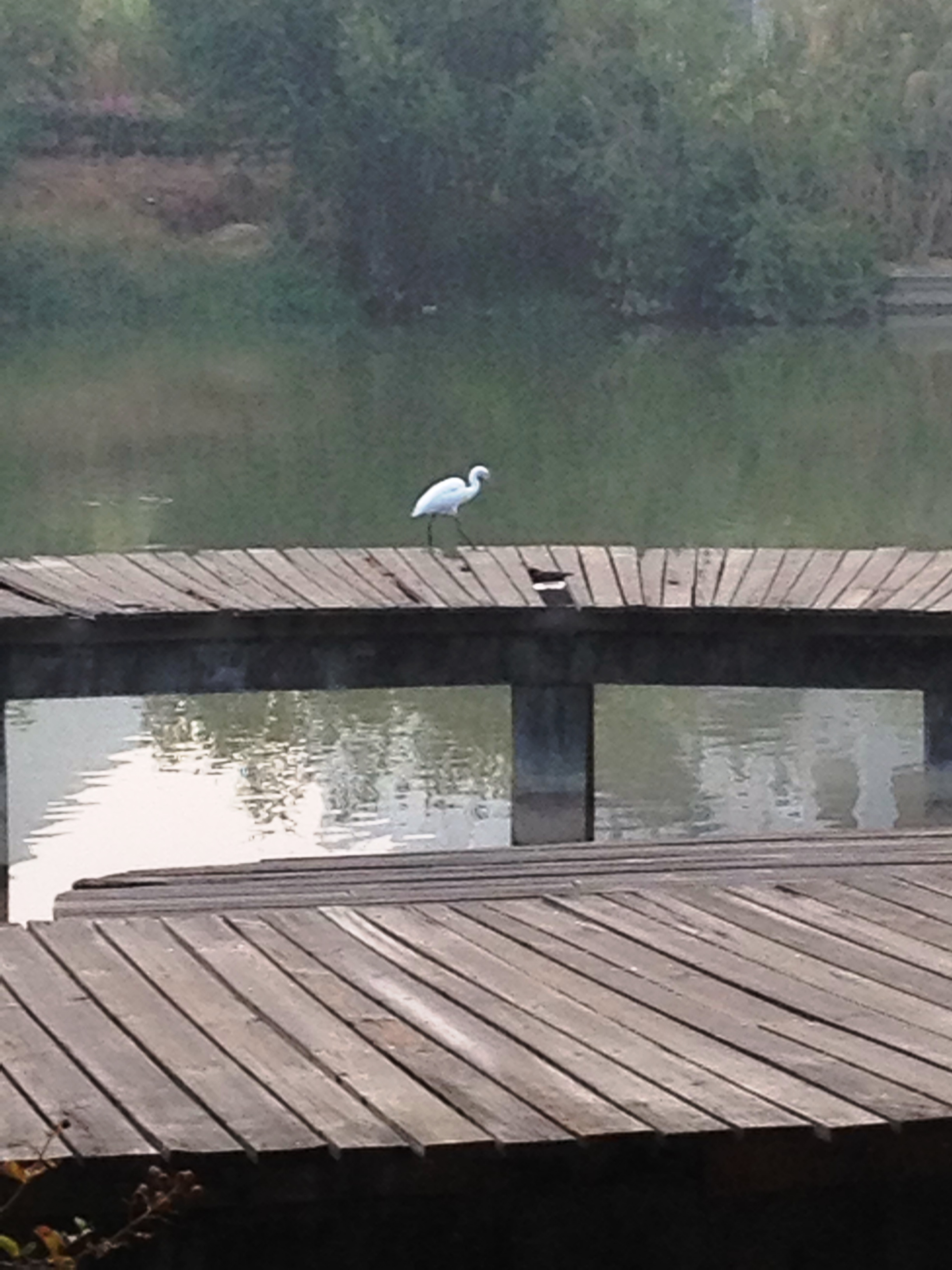
Egret on holiday
Our campus has a sanctuary for egrets. In the summer, one can see the beautiful white egrets perched on the trees by the lake –beautifully white on a green background.
The campus has provided the egrets with a safe haven where they can freely get food and not fear being hunted. True, a lot of of people — students and tourists alike — take pictures of them, but there is no threat.
As winter is approaching, most egrets migrate to the south where it is warmer, like my country.
Walking to work the other day, I saw this lone egret on the wooden bridge. I looked around for other egrets, and there were none. I strained my ear for the kraaa-aaa sound, but there was none.
I’m always guilty of overthinking things and over-empathizing. I imagined what it is like for the egret if it has really been left behind by the other egrets.
Let’s call the egret Trista. Is Trista happy that she can have all the food she wants as she has the lake all to her self, after all it really is not winter yet? If she has parents and siblings, is she happy that she can finally do what she wants to do without them watching every move she makes and criticizing her for not doing things well?
Did she choose to stay, or had she no choice but to stay?
Perhaps when evening comes and it is time to sleep, Trista will begin to feel the pang of loneliness. As it gets darker and she sails through the sky alone, and she looks down and sees human families relaxing at the well-lit park and lovers sitting close to each other on the wooden bridge on the lake, maybe she will feel so alone. And lonely.
When she goes back to her home where her mother’s constant nagging used to annoy her, and her siblings never-ending chatter used to drive her crazy, does she wish they had not left, or that she had left with them?

I watched its movements and thought it was really enjoying its time. Or maybe it’s just my imagination.
Share this:

Serenity in Solitude

The other day I read about a father who sang a song and played the guitar for his dying baby.
I couldn’t stop crying, and just wanted to hold my sleeping Eli as tightly as I could.
There is so much pain and suffering in this world, but since I was 19, I have always believed and seen pain and suffering coming to an end, joy taking their place, and making people stronger, until the next round of pain and suffering comes.
A friend once called me masochistic because I said I liked feeling sad and experiencing pain because the experience made me think and introspect, thereby making me know myself better. And thinking and introspecting always give me peace and the energy to go on living in such an absurd world.
When I am down or just want to vanish from this world, I am blessed enough to remember the only time I had a one-week retreat in a Carmelite Monastery by the sea. It was so long ago, almost twenty years ago when I was at the height of searching for answers to questions that my mother worried were driving me crazy. (She always complained that it took me forever to finish doing the dishes because I was always lost in thought!)
For one week I was mostly alone in a 4-story building that was the retreat house. My retreat guide came to visit me twice and did not stay longer than two hours each time. I had a room on the top floor which was close to the big balcony that faced the sea, where every half an hour, a ferry from the west port would cross to the south port. I stayed out in the balcony in late afternoons and waited for the sky to turn from orange to gray and then black; and then the lights from the ports came on, and I could see the lights from the ferry moving in the darkness. In the morning I went to a wooden gazebo on stilts right in the water connected to the retreat house by footbridge made of bamboo. I would listen to the sound of the small waves as they hit the bamboo stilts underneath, smell the briny scent of seawater, and hear the occasional squawk of a bird overhead. These images, sensations come back to me as clearly as the time I was there.
My theosophist friend with whom I used to spend a lot of time talking TO (she just listened most of the time, bless her) once told me that one reason we miss somebody or something too much when they/its gone, is that when they were there, we did not give our whole self to them. Our mind perhaps wandered to somewhere else, and so our experience of them was incomplete. So that time when I was on a retreat, I made sure I was completely there. I watched,listened and felt my surroundings. I will say I miss being there, but I can also “go back” to that place whenever I need to. I can have a few minutes of peace and serenity just by remembering my time in that retreat house.
I do not mean to offend people who suffer because I, too, have suffered, but I find beauty in suffering and pain. I get energy from knowing that this suffering would come to an end, and when it does, I will experience joy, and it will be very sweet just as sweet food tastes even sweeter after eating bitter food.
But to find beauty in suffering, one needs to get away from everything. One needs to be quiet and look within to be able see better what is outside. This is nothing new, and I’m not trying to sound like an expert on this subject, but I speak (write) from experience.
These days it is extremely difficult to have some real quiet. People cannot get away from their cellphones. For everything that happens in their life, no matter how trivial, they feel somebody else has to know. Or they feel they have to know what other people are up to. People are so concerned with what they look like on the outside that they have forgotten to look within and know themselves, who they really are and of what they are capable. There is more self-absorption than self-awareness , and it does not help anyone.
I hope we can all find time, especially when we are down, to get away from it all and go to a place –physical and/or spiritual — where we can recharge and be better equipped to face life’s absurdities.
Have a pleasant week!
Share this:

“Everybody’s somebody’s fool…”
It was supposed to be a rock music day –I started with U2’s The Joshua Tree album and sang along with Bono, and then it was Freddie Mercury and the Queen. But as I went over the Lyrics folder in my old portable hard drive I saw “Everybody’s Somebody’s Fool” and remembered the song.
I first heard this song when I bought a CD called “When Love Goes Wrong” a few years back.
Everybody’s somebody’s fool
The world is the biggest school
As you live, you learn though a torch will burn
Everybody’s somebody’s fool
You go through life making fools of others
Pretending you’re giving them love
But remember sister or brother
You all have to answer to the one up above
It’s beautiful to watch love begin
But oh so sad when it ends
As you go through life remember this rule
Everybody’s somebody’s fool
It’s beautiful to watch love begin
But oh so sad when it ends
As you go through life remember this rule
Everybody’s somebody’s fool
—
It seems like ages ago when I felt I could have written those lyrics myself. I think many have played the fool at one point in his or her life — when one gave all and left almost nothing for oneself — to someone who, as one looks back, was not really deserving of it, and not just because the love that was offered was not reciprocated, but because the person was not what you thought. But c’est la vie. Perhaps at one time, too, we fooled somebody into believing we loved them, when, really, we were just fond of them like we are fond of pets.
This song also reminds me of the first line of one of my favorite contemporary novels written by Andrew Sean Greer, The Confessions of Max Tivoli: “We are each the love of someone’s life”. This sentence really moved me at the time. My mentor/spiritual director/idol mentioned it to me, and I looked it up and read the book and emailed Mr. Greer and, I think because he wasn’t as famous that time and had the time to read and reply to emails, he replied to my email, and I was in heaven. It is so true. There is that one person who truly loves us, and remains faithful to us despite the many shortcomings or hurts we have caused them. They are our angels. Of course psychology will have a different explanation, but who cares? Somebody loves us more than we can ever love ourselves or them, and it’s enough.
You maybe a fool now (perhaps you fooled somebody in the past), but know that someone out there loves you. You are the love of someone’s life. Be grateful for that love.
Share this:
Rain must fall…
It rained the other day, and I unhappily walked to work. The sky was gray, the roads were wet, and it was a little chilly. Then I saw the plants and how green they seemed in the rain, and I stopped to look at one tiny plant with droplets of rain on its leaves. It was beautiful. I took a picture of it, and later showed it to a friend who reminded me that without water there’d be no life or growth.

Though I agree with it, I still find walking in the rain in the morning depressing. Somehow it’s different from walking in the rain at night when you don’t really see anything but just hear the sound of the rain on your umbrella, and the smell of dry earth as the rain touches it. And that’s nice.
Looking at the picture of that tiny plant I saw yesterday, these lines came to mind:
“Into each life some rain must fall,/ Some days must be dark and dreary.”
Must.
Who wants sadness? “Normal” people will say nobody. But some people actually like sadness as it brings them closer to themselves, makes them see the world and its people from a different perspective, and consequently helps them gain confidence in themselves.
The Chinese often wish their friends “happy everyday”. I would like to be happy everyday, but I am all too aware that it is impossible; so, my awareness of its impossibility makes me savor every second of that moment of happiness when it comes. Its ephemerality is what actually makes it worth experiencing.
Imagine if you were happy everyday: you do whatever you like, and nobody makes you feel guilty for doing so; no one that you dislike bothers you; no one upsets you (especially your boss or spouse or boss/spouse); everyday you have only happiness. I’m almost certain you will get bored with happiness, and you will say to yourself, “There must be more to this life than just being happy.”
We appreciate the sunshine more after the rain. And we appreciate the rain after the drought.
When I look back at my life, I find that all those times I suffered, wept, and felt like it was better to put an end to my life were the times I came to know myself better and to love myself a little more, and it gave me the confidence that I could survive whatever came my way.
Without water there would be no growth. Without rain in our lives, without sad and dreary days, we would never grow stronger, never learn to cherish the little happiness we experience every now and then.
Thank God for the rain (but not for the typhoon!)
Share this:

On writing and inspiration
For as long as I can remember I have always said to myself I could never be a Writer. But, I can always be an aspiring writer. My uni professor had my story, a tale I wrote for his Creative Writing class, published, and it was then I started to hope to become a writer.
To hope to become a writer.
That was over twenty years ago, and I am still hoping. I have had a few of my short stories published in literary journals back home, but having them published does not make me a writer. How do I know I am not a writer? I still depend on inspiration to make me write.
Recently I watched a movie called The Words. I would never have heard of this movie here if not for my best friend #3 who knows I’m crazy about Bradley Cooper (I know I’m 42 and married and have a child, so what?) And he was right about me liking the movie because gorgeous Bradley Cooper plays a writer in this movie (a gorgeous writer!)
I keep digressing.
Although the movie is about making mistakes, trying to correct them and redeeming oneself, what moved me most was a couple of lines uttered, not by gorgeous Bradley Cooper, but by Jeremy Irons.
The old man (Jeremy Irons) spoke about that period when he wrote the novel, how he forgot to eat, how the words just flowed from nowhere, and he just kept on writing. He was inspired. The muse came to visit him, but never came back after that. That’s my favorite scene.
When I watched that scene, I felt like it was I telling the story. I experienced those same feelings over twenty years ago when I wrote my very first short story –a love story– at two o’clock in the morning. Earlier that evening I saw a scene from a romantic movie, the silhouette of a man and a woman standing on the beach, watching the sunset. That scene stayed with me even after I fell asleep. Then in the middle of the night, I woke up and felt the need to write something. And I did. My hand shook as I was writing, and I was writing so quickly as the words just kept coming, flowing, and I was afraid I would lose them if I failed to write them right away, like sands slipping through the fingers. When I finished I felt exhausted but at the same time relieved that it was over. That was the first time the muse came to me. And it never came again.
Last week I could not write anything. Or I could have, but I did not and still do not want to write about anything depressingly sad and those were all I encountered last week: a friend getting divorced, a friend thinking of breaking up with his girlfriend, a young person I know passed away (RIP). When I told my husband I could not write anything, he just said “Don’t force yourself to write or you will just write something that says nothing.”
And he’s right. I cannot will myself to write. I always need something to make me write. I am not a writer.
But I can always be an aspiring writer.
Share this:

Remembering Papa
I don’t remember ever celebrating Halloween as a child. We observed All Saints’ Day and All Souls’ Day by going to church and the cemetery to clean the graves and light candles for our departed loved ones. When my grandparents passed on, my mother would “offer” some of their favorite delicacies and tobacco leaves for my grandfather, (he rolled his own cigar) on our small altar which had small statues of Jesus and several saints. As children we eagerly waited for our parents to finish praying (for the souls’ “eternal repose”), so we could eat what had been “offered.” That was fun.
When my father passed on 12 years ago, I started my own tradition of drinking and smoking a cigarette twice a year — on All Saints’ or All Souls’ Day and on his birthday/death anniversary. I’m alcohol intolerant so one glass of rum (okay, rum and cola) is enough. He never liked beer. I’m not into smoking, so one or two is all. I used to like watching him blow smoke rings, so now when I do smoke I try doing the same.
So Halloween is here again. I cannot really get into the spirit of this festival. Tonight when people party celebrating life, I’ll be lighting a candle and smoking a cigarette and drinking rum (and cola) while listening to Bing Crosby and Nat King Cole, remembering one of the most important people in my life.
For Papa
(This was written 8 years ago. I know it’s sentimental, but I think we are all entitled to be sentimental once in a while. So bear with me.)
Is it true?
You see your entire life
Flash in front of your eyes
The second before you die?
And if it is,
What did you see?
Did you see yourself
Smiling and waving
To people who called out your name
When you won that basketball game?
Did you feel proud
Being in that moment again when
Your opponent shook your hand
After you beat him at tennis?
And what was it like,
When you relived that moment
At the altar, with that young woman
With whom you exchanged “I do’s”?
Was it as amazing as the first time
In May, when you first saw
And then held your first child,
So tiny and fragile in your arms?
Was that October day vivid still,
Or did tears make the flashback hazy,
As to the altar, you led your second daughter,
To where her groom was waiting?
Did it make you laugh hearing
Your third daughter’s ringing laughter,
The one you always tried to copy
And made her laugh all the more?
And did it pain you again,
When your youngest daughter came home
That night you would pass away, when she barely looked at you
As she hurried to her room to work on her thesis?
Did you feel that love
That we sometimes were too greedy
To give you, yet, you know we had inside.
Did you feel it as we surrounded you
On your death bed?
Did you hear my mother and my sisters crying out your name?
And did you hear me whisper, “Don’t go, Pa. Please fight.”
Was that why there were tears in your eyes
That few seconds before you died?

Share this:

Musing on mornings

Jimei has a beautiful campus. I walk to work around 7 in the morning four times a week, and each time, I walk slowly so I can enjoy the scenery.
I am a morning person. I get up at 4:30 in the morning most days and do my ritual of making coffee, reading the news, mopping the floor, doing a 20-minute workout, grabbing a bite, then taking a shower. If I miss one of those in the list, I get a little disoriented.
These days the morning air is so cool that when I open the kitchen window and hear the rustling of the leaves and the merry chirping of the birds, and feel the cool touch of the breeze on my face, I am reminded of two poems: one by Wordsworth and the other by Hopkins. (I’m serious. If you have ever been taught Poetry by a professor as poetic and romantic as Dr. Anthony L. Tan, and lived in a convent — trying to become a nun– for a few months, then you’ll understand my way of thinking.)

Composed Upon Westminster Bridge
By William Wordsworth
Earth has not anything to show more fair:
Dull would he be of soul who could pass by
A sight so touching in its majesty:
This City now doth like a garment wear
The beauty of the morning: silent, bare,
Ships, towers, domes, theatres, and temples lie
Open unto the fields, and to the sky,
All bright and glittering in the smokeless air
Never did sun more beautifully steep
In his first splendour valley, rock, or hill;
Ne’er saw I, never felt, a calm so deep!
The river glideth at his own sweet will:
Dear God! the very houses seem asleep;
And all that mighty heart is lying still!

God’s Grandeur
Gerard Manley Hopkins
The world is charged with the grandeur of God.
It will flame out, like shining from shook foil;
It gathers to a greatness, like the ooze of oil
Crushed. Why do men then now not reck his rod?
Generations have trod, have trod, have trod;
And all is seared with trade; bleared, smeared with toil;
And wears man’s smudge and shares man’s smell: the soil
Is bare now, nor can foot feel, being shod.
And for all this, nature is never spent;
There lives the dearest freshness deep down things;
And though the last lights off the black West went
Oh, morning, at the brown brink eastward, springs—
Because the Holy Ghost over the bent
World broods with warm breast and with ah! bright wings.
Even though I am no longer so certain about the existence of God, the beauty of the morning somehow brings back my sense of gratitude to the creator of such beauty, and since in my simple brain, there are no other candidates for that position, then let it be God for now.
Early morning, I find, is much more beautiful than night time. (Or is it just that I am getting old and can no longer appreciate the beauty of darkness where sweet words are whispered and gentle touches are felt?)
When I take an early morning walk, and see the dew on the leaves and feel the damp earth, and hear the birds sing, and smell the grass, I am always filled with that kind of bliss that makes one want to love the world and to desire to be a better person deserving of such wonder. For someone who has been waiting for death since she was 20, this is one of the very rare moments when I am actually happy about life, one of my Sisyphus-reaching-the-top-of-the-hill moments.
The awareness of the ephemerality of these moments is probably what makes people, like me, appreciate them more.
Like everything else in this world, they come to an end, sometimes too soon, when I start hearing the honking of vehicles and seeing people push and shove each other to get on the bus to get to work.
But this is life. I am just grateful to know that there is time, when I need it, for nature to refresh me and make me ponder on how good it is to be alive.

Share this:

The Cake and the Sea
The Cake
A young woman sees a piece of luscious-looking Black Forest cake on a dish right in front of her. She doesn’t know whence it came from, or who owns it, but she knows for sure it is not hers. Black Forest being her favorite cake, she is very much tempted to taste the cake, but having been taught since she was child that she cannot take what is not hers, she dares not touch it.
Yet she sits there and stares at the cake, imagining what it actually tastes like. One might say it is a total waste of time to sit there and just stare at it. Why not pick up a fork and just eat? Perhaps the owner has forgotten it. Or maybe it was really intended for her. Or why can’t she just leave and buy her own cake? Surely that is not a difficult thing to do?
Yet, the young woman stays and admires the cake and enjoys the taste of it in her mind.
One might say what a silly thing to do. Yet it is human nature to linger long after the ship has sailed.
So why do humans linger? Why do we linger when, for some, the chapter has come to a close?
Could it be the young woman is hoping that someone is going to come and tell her that without a doubt, this cake was baked especially for her, that the baker had no one else in mind but her when the cake was baked. (A little self-absorbed, wouldn’t you say?)
Or could it simply be that in her mind, and in her mind alone, the cake is doubtlessly luscious and doubtlessly hers alone, not to be shared with others, because a truly good cake is not to be shared but to be savored only by oneself. (This time our heroine has imagination, no matter how pathetic.)
“Heard melodies are sweet, but those unheard are sweeter.” John Keats knew the power of the imagination.
Without actually eating the cake, the woman can imagine its texture, its sweetness, how the chocolate melts in her mouth. If she does taste it, there is a huge possibility she will be disappointed. (So true about Chinese cakes!)
So our heroine sits and stares and sits and stares. She sometimes sighs. But she is somehow satisfied with sitting and staring, much like an old lady sitting on her rocking chair staring at nothing, but in her head reliving the joy of living like she experienced once when she was a young vivacious woman.
———————————-
The Sea

I learned to swim only in my 20’s, and it was jealousy that made me do it. My then boyfriend and I had been trying to learn to swim, but he learned faster than I did. Once we went swimming with my friends, who were pretty good swimmers. They all swam to the deep part of the pool, and my boyfriend went to join them leaving me behind. I was annoyed that I let that happen (I was a disgustingly clingy and obsessive girlfriend. Ugh!) So out of the blue, courage came and my limbs became stronger, and I successfully swam to the deep part of the pool.
Sometimes jealousy can be awesome!
Now I can swim, but only in the pool. I have not been waist-deep in the sea since elementary school, I think.
But I love the sea. I love sitting on the beach and listening to the waves. I love the smell of the sea, and the feel of the breeze on my skin. I love the feel of the fine sand and the touch of the cool water on my bare feet. But only on my feet and my shins, no further than those or I will lose my balance and the waves will carry me, and I will drown. That’s not how I want to die (better on a plane that explodes mid-air –quick and no body to bury.)
I truly love the sea; I am in love with it. Its music soothes me; the undulations of its waves hypnotize me; its breeze refreshes me.
But I love the sea from a distance. Its depth terrifies me; its vastness isolates me; its power humbles me.
For a weak swimmer like me, it is best to swim in the pool.
Got it, dear?
Share this:

3Ds: Desires, disappointments, dreams

At the age of 17 when the thought of boys and dating engrossed my classmates (all three of them), I first heard and truly understood the meaning of the statement: Desire causes suffering, in Professor Ortega’s Asian Literature class. Prior to that the only thing I knew of Buddhism was that Buddha was a big, overweight, hairless man who happily let children climb all over him. There was a hole on his head where one could put coins. Yes, a ceramic Buddha was a popular coin bank when I was just a child. (I went to a Catholic high school and discussions about other religions were not encouraged nor tolerated. And I was raised by devout Catholics who were both choir members in the church. Hence, 17, a little late. )
I no longer remember the story that we were discussing in class then, but my introduction to the idea that desire causes suffering was a catalyst in my life. It has since been ingrained in my brain and has spared me from what could have been disastrous consequences of my giving in to unreasonable desires. The idea taught me to to be content with whatever I have, no matter how little.
Realizing that it was not easy to let go of any kind of desire, I searched for ways to make it feasible. I read, and as happens when sometimes one searches for something, one discovers something else, I came across Stoicism–indifference to pleasure or pain, another interesting thought. Serendipity. I tried to practice it, of course not realizing right away that I was just pretending to be apathetic. Perhaps it is impossible for literature majors to be stoic; empathy is hard-wired into our consciousness.
Later I realized that my attempts at stoicism was in itself a desire, and because I could not be successfully stoic, I was disappointed with myself and suffered.
Then came the acceptance that it was impossible for me, an ordinary mortal, to be without desires. However (yes, there was hope), I thought I could limit my desires.
“Simplify. Simplify. Simplify.” Thoreau could not have been more thorough in his advice.
I never wanted to get married. I thought, what’s the point? We are born alone. We die alone. But I got married, the reason I will not write about, but suffice it to say, I never did want to get married. The comedy of how I ended up married will perhaps be written about years from now. By me, of course.
I never wanted a child. An erstwhile friend once said to me he would never forget how I told him pregnant women looked like victims. I wish he had seen me pregnant. We would have had a good laugh about it.
I got pregnant because I had to fulfill a promise to my husband that I would give him a child. I tried to postpone it a couple of years, hoping it would be too late; but I was meant to be pregnant. I had tried to convince my husband that I should be enough for him. He and our marriage were certainly enough for me. I did not want anything else. I failed of course, especially because he is Chinese. If you have ever come to China, you will know what this means.
Now I am a mother to a three-year old boy who has ASD (autism spectrum disorder).
When Eli was just born, my husband had big dreams for him: study at Harvard, marry a beautiful Norwegian girl (he read somewhere that Norwegian girls are the prettiest in the world.) He dreamed of living in a big house with his son who would have a beautiful Norwegian wife and equally beautiful children. That’s a huge dream.
I chose the name Elijah for my son because I had hoped my son would be a wise man, a prophet or a philosopher. I had also in mind how God had sent birds to feed Elijah while he was hiding from those who wanted to kill him. I hoped for my son to be well looked after even when I was no longer around. I promised God I would make my son serve Him. (But a part of me also wanted him to be a spy like Jack Bauer. Crazy, I know. Dual personality.)
As you can see my husband and I had very different dreams for our son. I did have a less idealistic dream, a short-term one, that I kept repeating to my husband whenever we went or passed by the nearest McDonald’s. I used to say to him I looked forward to Eli turning three or four and hanging out with me at McD, eating ice cream. As simple as that. There was no dream of him going to Harvard or marrying a beautiful girl (in fact, I always said I would not want to be around long enough to see him have a girlfriend. I would die of jealousy.) I thought he could go to the same state university I went to in my home country. (My best friend used to tell me I had a small brain with very small dreams. Well…)
Fast forward to when my suspicions about Eli’s condition were confirmed, I thought, “If there is a god, then he is probably having a good laugh about this. He is truly one cruel god.” I never wanted a child because I did not want responsibility. Yet, look what I got. One HUGE responsibility.
But god or no god, I brought this child into this world, he is MY responsibility.
I wept for my son and for the difficult life he has ahead of him; I wept for my husband whose Harvard dreams for my son vanished and was replaced by; “I just hope for my son not to end up begging in the streets.”
If there is one good thing that came out of all this misery, it is that my husband became more realistic about his dreams for my son. In fact they are no longer dreams but weekly or monthly goals for Eli to accomplish. The pain of the reality that we have an autistic son will never go away, but it can be dulled by the the slow but steady progress Eli is making.
All parents wish/hope/want/desire for their children to have a happy, comfortable life. That desire can cause suffering, but it is the kind of suffering that a parent would willingly bear for the sake of the child he/she brought into this world.
It is human nature to desire; and it is inevitable for humans to suffer. But we can minimize the disappointment, the suffering, by not desiring too much, nor wanting too much, nor expecting too much from the ones we care about.
Last night when my husband and I were eating a McD sundae, overacting our enjoyment of the ice cream to make Eli want to eat as well, Eli looked at me and smiled. I prompted him by asking, “Eli, what do you want?” And he replied, “I want ice cream.”
My dream is on its way to becoming a reality.
Share this:

Aging and Memories

Iligan City, Philippines
I like being in my 40’s. Of course people will say it’s because I have no choice, but it’s more than that. I have embraced being 40 something, and am loving myself more and becoming more confident than I have ever been about myself. It’s great not to worry about what others think about what I’m wearing. I think that’s the biggest and silliest thing I ever worried about before. I still worry about whether people think I’m stupid. I know I can be stupid sometimes, I just don’t like it when other people say it. I’ve never really worried about what people think about what I do for as long as I enjoy what I’m doing. Especially now that I’ve been living in another country for the past 11 years, I’m not really bothered by what people back home or even in the country I’m in, think about my actions. Being a foreigner has given me the freedom to be what I want to be without hurting the sensibilities of those I care about back home. (Look, mom, I’m 42, happily married to a good man and have a cute little son! I can take care of myself.)
With age people tend to become forgetful. Sometimes I find myself forgetting what I did just a few minutes ago. I have to pause and think (usually aloud!) “What was I doing earlier?” I find that scary. But with age, too, some memories become even more vivid.
A few days ago I had early morning coffee with a friend. It was a beautiful, clear and breezy Monday morning, and the coolness of the air brought back memories of a certain bittersweet feeling that was so strong back then when I was feeling it, and seemed just as strong as I was recalling it. For a few seconds I was back in that spot where I stood 15 years ago, hearing the rustling of the leaves of the tall, thin trees as they swayed toward each other, the crackling of dried leaves as they were stepped on, and the tiny voice inside of me that was saying, “This is all so beautiful, I don’t want it to end”;and then the voice that ended it all when it said — “You know why this is so beautiful? It’s because we know it’s not gonna last.”
There are memories that we wish we could just forget, memories we wish we would remember forever, and memories that just appear when we least expect them. As we live each day we are creating new memories. We have no way of knowing whether they’ll be forgettable or unforgettable ones, but we can try to make good ones as we create them. October 16

 Thoughts on Life